Friday, April 24, 2009

Music for the Movies: Toru Takemitsu

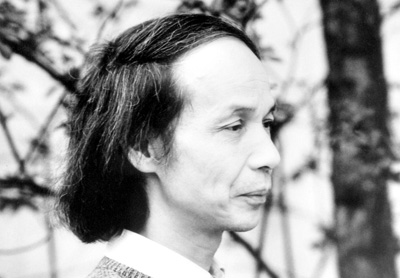
This is a documentary from 1994 about the brilliant contemporary and film composer Toru Takemitsu. If you're into Japanese cinema, you probably already have an awareness of his moody, abstract and utterly atmospheric work on such films as Kwaidan, Woman of the Dunes, Samurai Spy and tons of others. He was the first to score a Japanese film with traditional Japanese instruments (before Takemitsu, all Japanese film scores were Western-style). Additionally, unlike most other film composers, Takemitsu was involved with each film project from the beginning, developing his ideas in collaboration with the director, in many cases influencing the course of the film itself.
The documentary features a treasure trove of interview footage with such luminary directors as Hiroshi Teshigahara, Masaki Kobayashi, Masahiro Shinoda and Nagisa Oshima, as well as plenty of illustrative film clips. I found a copy (VHS) online for $10. Can't beat that with a bo stick!

Wednesday, April 15, 2009

Kaidan-eiga

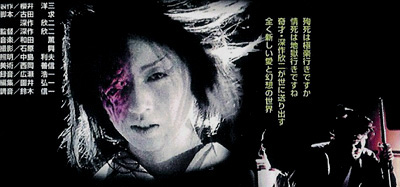
Saw a couple of good kaidan-eiga (supernatural period dramas) recently. Crest of Betrayal (1994) takes the Ghost of Yotsuya story and mushes it together with the Chushingura, resulting in the wicked ronin Iemon (actually not so wicked in this version) as a member of the Loyal 47 Ronin of the Asano clan. (He was apparently hired on right before Lord Asano lost it and tried to hack up the manipulative Lord Kira; Asano's subsequent enforced seppuku has, of course, left his retainers bent on revenge.) Iemon's wife, Oiwa, is poisoned by the family of Oume, a rival for Iemon's affections, and becomes the classic long-haired, vengeful lady ghost. Kinji Fukasaku directs with style and flair. Playing Iemon is Koichi Sato, whom you might have seen in the Shinsengumi flick When the Last Sword is Drawn (2003, reviewed in my forthcoming book, Warring Clans, Flashing Blades, due out in June). Oiwa is played by the beautiful and buxom Saki Takaoka (who'll be co-starring in a film with Danny Glover this summer). And you won't want to miss cult film fave Renji Ishibashi in a bizarre turn as Oume's rich weirdo daddy.

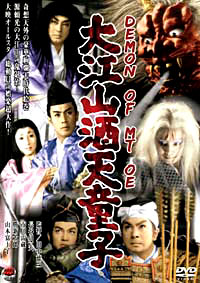
Demon of Mt. Oe is an all-star Daiei epic from 1960 starring Raizo Ichikawa, Shintaro Katsu, Kazuo Hasegawa, Tamao Nakamura, Kojiro Hongo, Jun Tazaki and many others. Raizo plays Yorimitsu "Raiko" Minamoto, a storied samurai warrior of Japan's medieval period known for going up against supernatural foes. (Kei Sato played Raiko in the classic Kuroneko, another film drawing on the spooky folklore of the period). Demon of Mt. Oe offers a thrilling blend of samurai sword action and fanciful (and at times cheesy) special effects involving a giant spider, demonic creatures coming down from the skies, spectral sorcerers and the like. I highly recommend this forgotten gem to anyone interested in Japanese film and folklore.

Tuesday, April 14, 2009

Toshiro Mifune

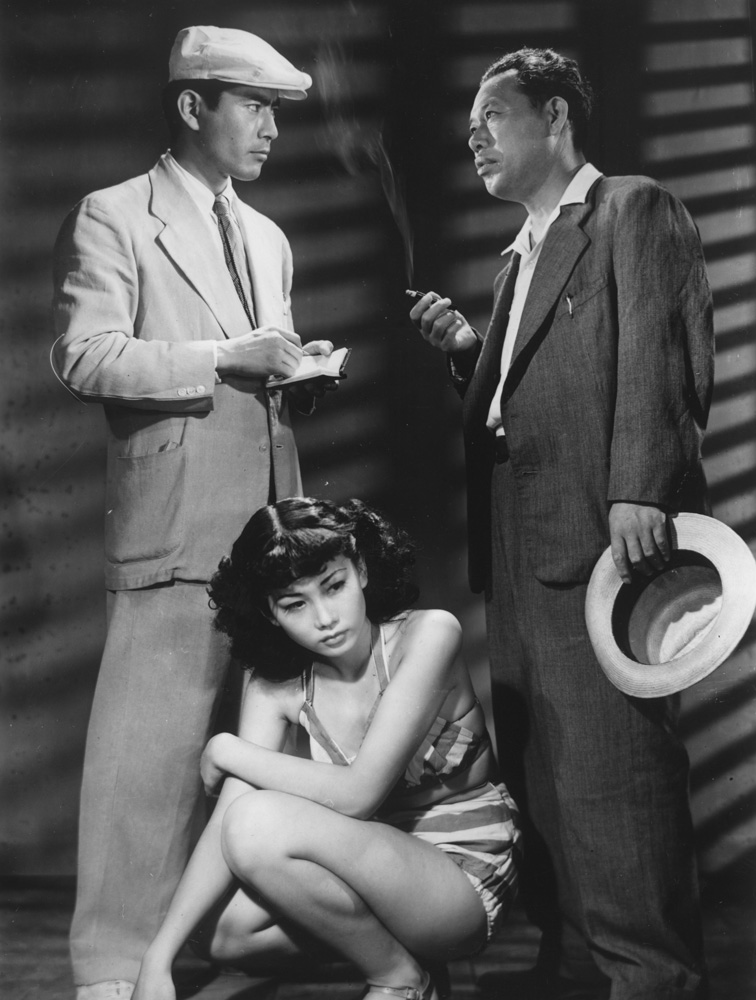
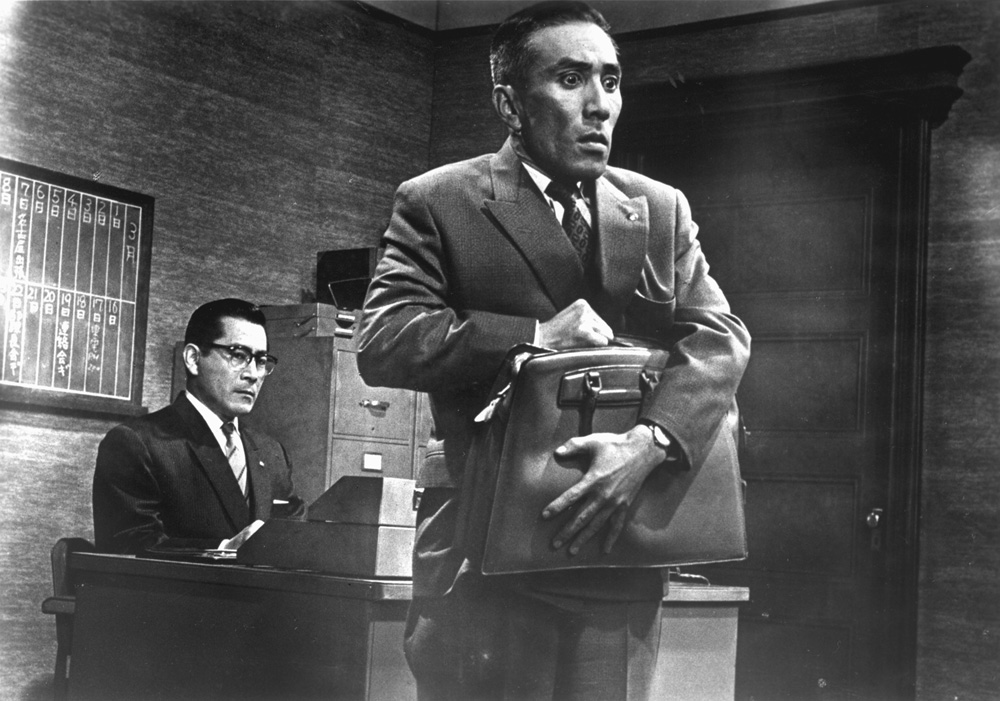
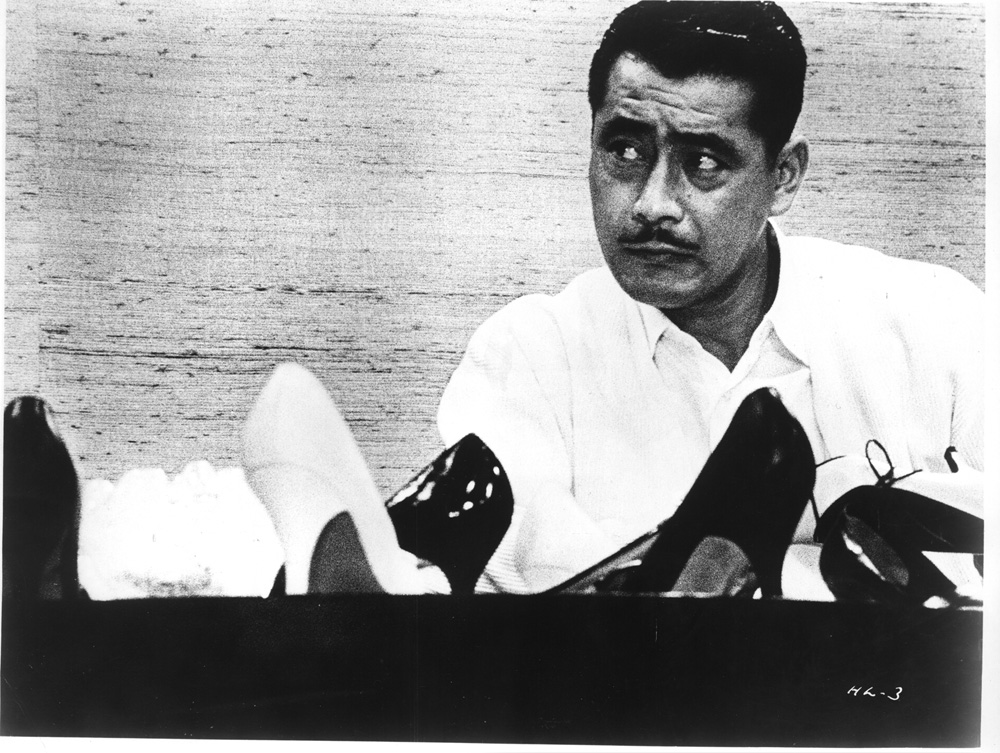
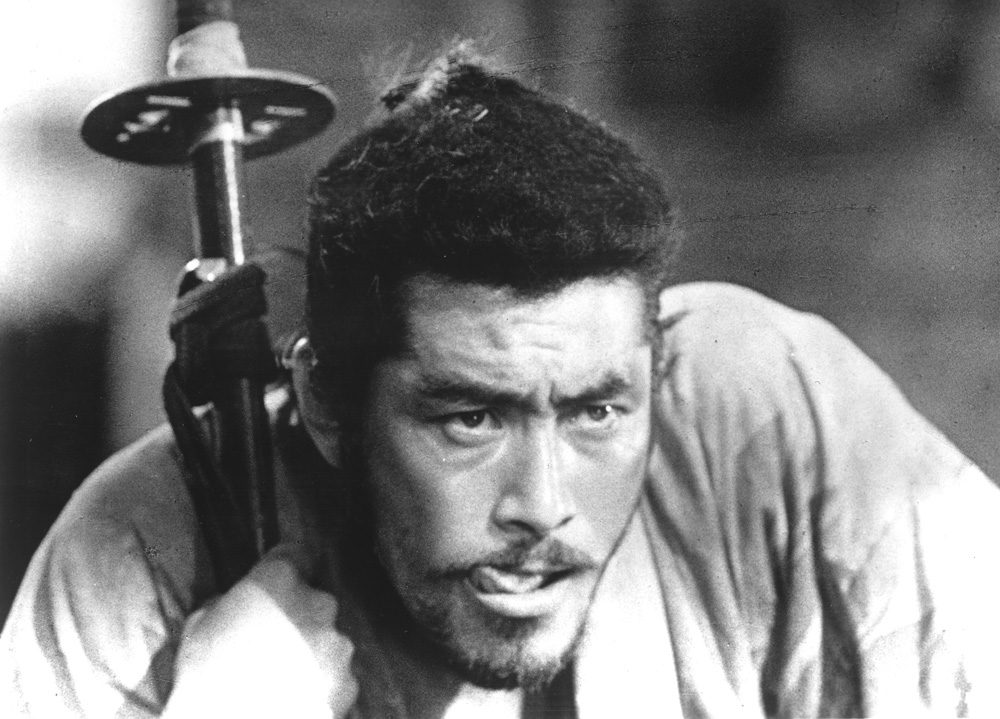
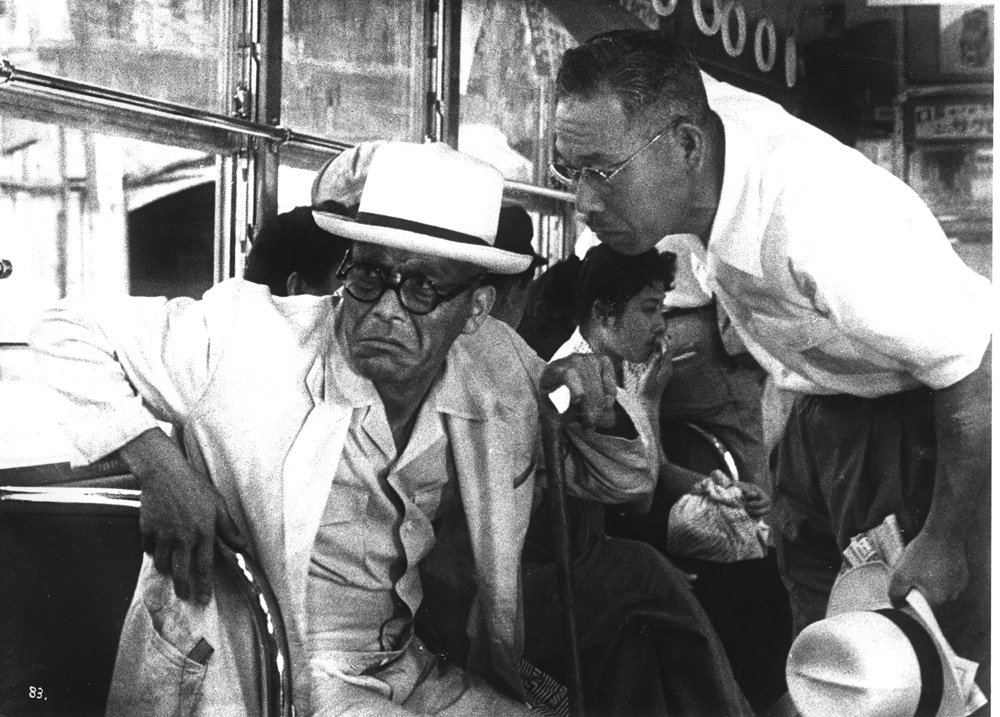
Was digging through some old production stills and found these featuring the legendary Toshiro Mifune. Enjoy (click to enlarge).

1949's Stray Dog with Takashi Shimura (and the very hot Keiko Awaji, between).


From The Bad Sleep Well (1960). That's the great character actor Ko Nishimura on the right. Mifune's character is slowly, methodically driving him insane.


From the taut kidnap thriller High and Low (1963), my hands-down, all-time favorite Kurosawa picture.


As farmer-cum-swordsman Kikuchiyo in Seven Samurai (1954).


One year after Seven Samurai, Mifune transformed himself into a paranoid, A-bomb-obsessed old man for I Live In Fear (Takashi Shimura, right).

Friday, March 13, 2009

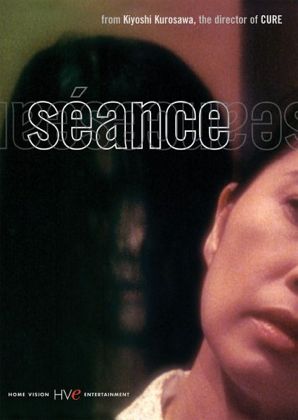
Seance

Of the half-dozen Kiyoshi Kurosawa films I've seen, he either hits it out of the park (Cure, Pulse) or makes a muddled mess (Charisma, Doppelgänger). One exception, however, is Seance, which is a little of both (leaning heavily towards the muddled mess side of the equation). While the film has its moments, the principle issue is that, in attempting an interpretation of the 1961 novel Seance on a Wet Afternoon by Mark McShane, the director strays so far from the source material that when he finally gets around to addressing it, the incongruities in plot and characterization completely undermine the film.

In the original story, an ambitious medium decides to advance her career by perpetrating a kidnapping and then helping the police solve the case. In Kurosawa's film, the Japanese lady psychic has no such intentions, and only hits on the idea once a little girl, kidnapped by someone else, appears in an equipment case belonging to her sound engineer husband (how the kid gets in there is another problem with the film, a twist to beggar anyone's willing suspension of disbelief).

On the plus side, there's Kurosawa's go-to guy, the always-great Koji Yakusho as the psychic's supportive yet beleaguered husband. And there are certainly some creepy moments, particularly after the couple inadvertently kill the little girl. However, the film is ultimately defeated by what my Stone Bridge Press label mate Jerry White calls (in his The Films of Kiyoshi Kurosawa) the director's "sometimes unfortunate disregard for narrative coherency." Seance comes nowhere near Pulse, Kurosawa's apocalyptic ghost epic. It's a small film, smaller than it should be, and will only appeal to fans of this sometimes-great director.

Wednesday, March 11, 2009

Bloody Reunion

If you know me, you know I have a weakness for violent Korean films, even when they're not very well executed. Bloody Reunion is a fairly decent shocker, but it suffers from an attempt at a twist ending that is more a WTF? ending that makes absolutely no sense. So instead of letting that ruin the fun, I'll just pretend the movie ends a bit before the lame mind-fuckery bit and discuss the rest of it.

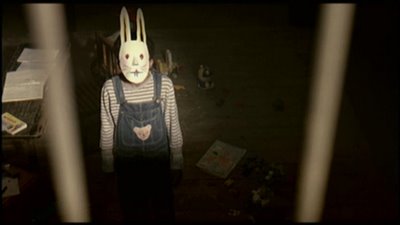
Seems a rural teacher running a one-room school out of her seaside home gave birth to a boy with facial deformities so hideous her husband hanged himself. She raised the little tyke in the basement (that's him above in the bunny mask), her students taking time out periodically to taunt him. It's twenty years later and a bunch of the now-all-grown-up students decide to visit their old teacher. See where this is going? That's right, you got it: Homicidal maniac in a bunny mask picking off the guests one by one. But is it the son, or another member of the group?

What makes this otherwise routine exercise more interesting is the gradual reveal that ol' Mrs. Park wasn't the caring, loving teacher her former students have come to celebrate (with liberal amounts of soju, beer and raspberry home brew). No, she was actually a nasty piece of work, humiliating, crippling, even molesting her little charges all those years ago. The tension of these revelations intermingles with the slasher plot to create an interesting new hybrid of suspense.

But remember: You gotta really be into dark Korean cinema to enjoy this one. Don't say I didn't warn you.

Tuesday, March 10, 2009

Pitfall

Hiroshi Teshigahara's feature film debut, Pitfall (Otoshiana, 1962) features ghosts, but it's not a ghost story. There's a murderer running around and the cops are investigating, but it's not a police procedural. And while the plot of the film concerns coal miners and factional infighting among union leaders, the film is certainly no didactic, left-wing screed. No, Teshigahara was first and foremost an aesthete, and this film, like his Woman of the Dunes (1964), The Face of Another (starring Tatsuya Nakadai, 1966), The Ruined Map (starring Shintaro Katsu, 1968), Rikyu (starring Rentaro Mikuni, 1989) and others, should be approached as an exercise in pure cinematic art. Sound and texture are the fundamental considerations here. Working with his longtime musical colaborator, sonic abstract expressionist Toru Takemitsu, Teshigahara brings us slowly and steadily into a stark, disorienting mirror world of our own full of uncertainty and existential dread.

After a destitute miner is stabbed to death for no apparent reason by a scooter-driving man in white (Kunie Tanaka), the dead man's ghost proceeds to wander around in a state of aggrieved perturbation, trying to figure out what the hell just happened. He is ignored by the cops as they examine his bloody corpse in a moment of ultimate beuraucratic disregard. Turns out he's the spitting image of a local union official. Was the murder a mistake ... or a warning? A woman who witnessed the murder is paid off by the murderer to give false evidence, only to be murdered herself by the same guy later on. When the two ghosts finally meet to discuss their mutual situations (ghosts can see each other but are invisible to the living), we get the kind of exchange I'd like to see a whole lot more of in contemporary film.

Luckily for you in the US, Criterion Collection released Pitfall in a box along with Woman of the Dunes and The Face of Another a couple of years ago, so you can get that and spend a profound weekend in the art house ethos of one of Japan's finest creative minds. (My copy of Pitfall is from the UK label Eureka, part of their Masters of Cinema series, England's answer to Criterion with a lot of titles you won't find on this side of the pond.)

Monday, March 9, 2009

Japanese Gore Roundup

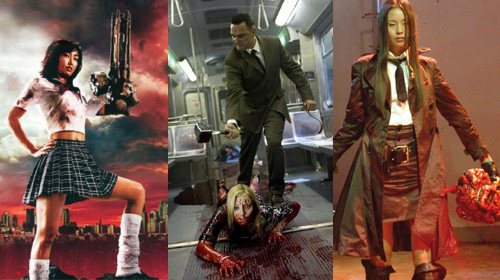
While I admit I was curious at the prospect of Midnight Meat Train, I couldn't deny a premonition deep in my soul that it would be crap. Sadly, I was right. Penned by Clive Barker and directed by high-octane Japanese filmmaker Ryuhei Kitamura (who gave us Versus and Azumi), the film is defeated by what appears to be a demand by the producers never to step beyond the most basic expectations created by the phrase "midnight meat train." In other words, the story is thin on the ground, getting even thinner once we delve underground and hop aboard the titular light rail vehicle. For all it's splatitude (a favorite recurring image is that of an individual slipping on, falling into, and rising covered in thick, glistening gore), the only truly scary thing in the picture is Vinnie Jones (but he's just scary period, so no kudos there). Only at the tag end of the film do we get any sort of backstory, concerning a hungry population of demonic, C.H.U.D.-like things, but by then it's too late and the credits follow hard upon.

Then there's Tokyo Gore Police and The Machine Girl, which make Midnight Meat Train look like Citizen Kane. TGP has the better budget of the two and features Eihi Shiina (whom most of us fell hard for in Audition, despite her proclivities toward torture and amputation in that flick). Both films try their best to shock, with techno-body horror, fire hydrant-worthy blood showers and every manner of mutilation imaginable. However, the efforts of the filmmakers go right past shocking into patently ridiculous, causing even a stalwart such as me to wonder whether he's wasting his time. I kept imagining a 12-year-old boy sitting watching these films, loving every gooey, outrageous minute; that's clearly the target audience here. It reminded me of the first time I saw a Rambo picture, that chilling feeling that this film was made for someone very different from me, and that I was never going to get into it like that other individual.

While The Machine Girl revolves around a school girl getting revenge on the bullies who killed her brother (and some of their brutal yakuza relatives), Tokyo Gore Police offers a more interesting back story (although this too boils down to revenge). In the end, though, I can't in good conscience recommend either unless you, like I, have a professional interest in keeping abreast of such things. And even then, it will feel more like work than pleasure.