Tuesday, May 12, 2009

Slumdog Millionaire

I watched this film last night. What a bunch of manipulative, melodramatic pap! I was really rather shocked. Not at the film itself, mind you, but, in retrospect, at all the hype and critical praise that was heaped upon this thing when it was released. People were falling over themselves to say how fantastic it was. I found it exploitational in the extreme, and, while I have nothing against exploitation cinema, let's call it what it is, shall we? The film lurched from one lurid set piece to another, mostly involving the endangerment and abuse of children, all within a cynically-packaged dual frame story of game show/police interrogation. Then, in a final fuck-you-you'll-watch-anything gesture, they tack a Bollywood dance number on the end.

While competently made by the once-great Danny Boyle, I have to say I was never engaged by this movie, much less moved. It was just too obvious. I can only assume that the avalanche of critical love for Slumdog Millionaire was either a simple case of monkey see/monkey do, or that Westerners are complete suckers for sentimental tales of Asian squalor. In that regard, take my advice and rent Salaam Bombay instead.

Wednesday, May 6, 2009

Reincarnation

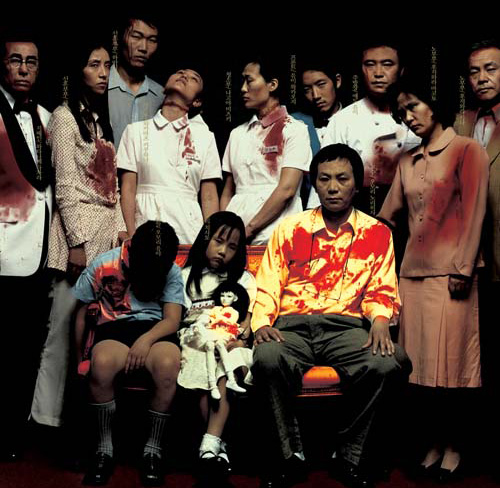
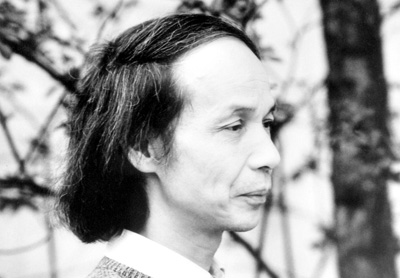
Director Takashi Shimizu has had a lot of success as a J-horror director. Not only was he responsible for the Ju-on: The Grudge franchise, he's one of the few Japanese filmmakers invited to do the Hollywood remake as well. He also made the very weird and low-key Marebito (starring Shinya Tsukamoto).

But one film he made back in 2005 didn't get much traction here in the US, a little J-horror gem called Reincarnation. Oh sure, it got picked up by the After Dark Horrorfest, but to be thrown in with a bunch of other so-called Films to Die For seems a significant step down for the talented Mr. Shimizu. So what happened? Admittedly the J-horror genre was losing its appeal, and perhaps Reincarnation was considered something to be unloaded for a quick buck. But I can't help thinking the stabbing deaths of two small children had something to do with it. As I pointed out in Asia Shock, killing kids onscreen is more common in Asian horror, but tends to be off-putting for US audiences. While not terribly graphic, the scenes are disturbing, and I wouldn't be surprised if that was the deal-breaker for American distributors.

Reincarnation hits all the J-horror buttons (sympathetic girl protagonist, freaky ghosts, a backstory concerning dark doings decades earlier), but adds a meta-fictional twist: The plot revolves around a movie being made about the events that led to all the horror (in this case a massacre in a hotel). Between the flashbacks, dream sequences, supernatural encounters and filmmaking sequences, it all gets rather disorienting rather quickly, but that's all part of the fun. Oh and to top things off there's a creepy doll that gets creepier as things go along.

As usual, I'm years late writing about this film, but who cares. I don't have to be Mr. First-Nighter at the film festival (although that's fun too). I get to 'em when I get to 'em. And I'm here to tell you, this was a good one.

Wednesday, April 29, 2009

R.I.P. Tadao Nakamaru

You may know him as the egg salad-addicted Shepherd Wong from Woody Allen's What's Up, Tiger Lily? (originally International Secret Police: Key of Keys). He was, in fact, a contract player for Toho studios and a fine actor, appearing in classic samurai films like Kill!, Warring Clans, Samurai Assassin and Sword of Doom. In addition, like his Toho cohorts, he played roles in a variety of genres including yakuza flicks (Fangs of the Underworld, Bloody Territories), sci-fi (The Secret of the Telegian, The H-Man), kaiju-eiga (Mechagodzilla vs. Godzilla) and war pictures (Desperado Outpost, Japan's Longest Day).

More on his death here. He will be missed.

Friday, April 24, 2009

Music for the Movies: Toru Takemitsu

This is a documentary from 1994 about the brilliant contemporary and film composer Toru Takemitsu. If you're into Japanese cinema, you probably already have an awareness of his moody, abstract and utterly atmospheric work on such films as Kwaidan, Woman of the Dunes, Samurai Spy and tons of others. He was the first to score a Japanese film with traditional Japanese instruments (before Takemitsu, all Japanese film scores were Western-style). Additionally, unlike most other film composers, Takemitsu was involved with each film project from the beginning, developing his ideas in collaboration with the director, in many cases influencing the course of the film itself.

The documentary features a treasure trove of interview footage with such luminary directors as Hiroshi Teshigahara, Masaki Kobayashi, Masahiro Shinoda and Nagisa Oshima, as well as plenty of illustrative film clips. I found a copy (VHS) online for $10. Can't beat that with a bo stick!

Wednesday, April 15, 2009

Kaidan-eiga

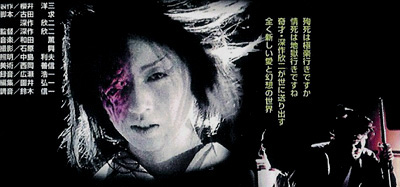
Saw a couple of good kaidan-eiga (supernatural period dramas) recently. Crest of Betrayal (1994) takes the Ghost of Yotsuya story and mushes it together with the Chushingura, resulting in the wicked ronin Iemon (actually not so wicked in this version) as a member of the Loyal 47 Ronin of the Asano clan. (He was apparently hired on right before Lord Asano lost it and tried to hack up the manipulative Lord Kira; Asano's subsequent enforced seppuku has, of course, left his retainers bent on revenge.) Iemon's wife, Oiwa, is poisoned by the family of Oume, a rival for Iemon's affections, and becomes the classic long-haired, vengeful lady ghost. Kinji Fukasaku directs with style and flair. Playing Iemon is Koichi Sato, whom you might have seen in the Shinsengumi flick When the Last Sword is Drawn (2003, reviewed in my forthcoming book, Warring Clans, Flashing Blades, due out in June). Oiwa is played by the beautiful and buxom Saki Takaoka (who'll be co-starring in a film with Danny Glover this summer). And you won't want to miss cult film fave Renji Ishibashi in a bizarre turn as Oume's rich weirdo daddy.

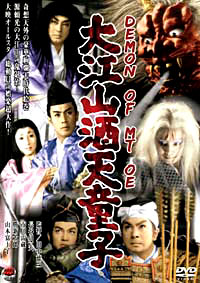
Demon of Mt. Oe is an all-star Daiei epic from 1960 starring Raizo Ichikawa, Shintaro Katsu, Kazuo Hasegawa, Tamao Nakamura, Kojiro Hongo, Jun Tazaki and many others. Raizo plays Yorimitsu "Raiko" Minamoto, a storied samurai warrior of Japan's medieval period known for going up against supernatural foes. (Kei Sato played Raiko in the classic Kuroneko, another film drawing on the spooky folklore of the period). Demon of Mt. Oe offers a thrilling blend of samurai sword action and fanciful (and at times cheesy) special effects involving a giant spider, demonic creatures coming down from the skies, spectral sorcerers and the like. I highly recommend this forgotten gem to anyone interested in Japanese film and folklore.

Tuesday, April 14, 2009

Toshiro Mifune

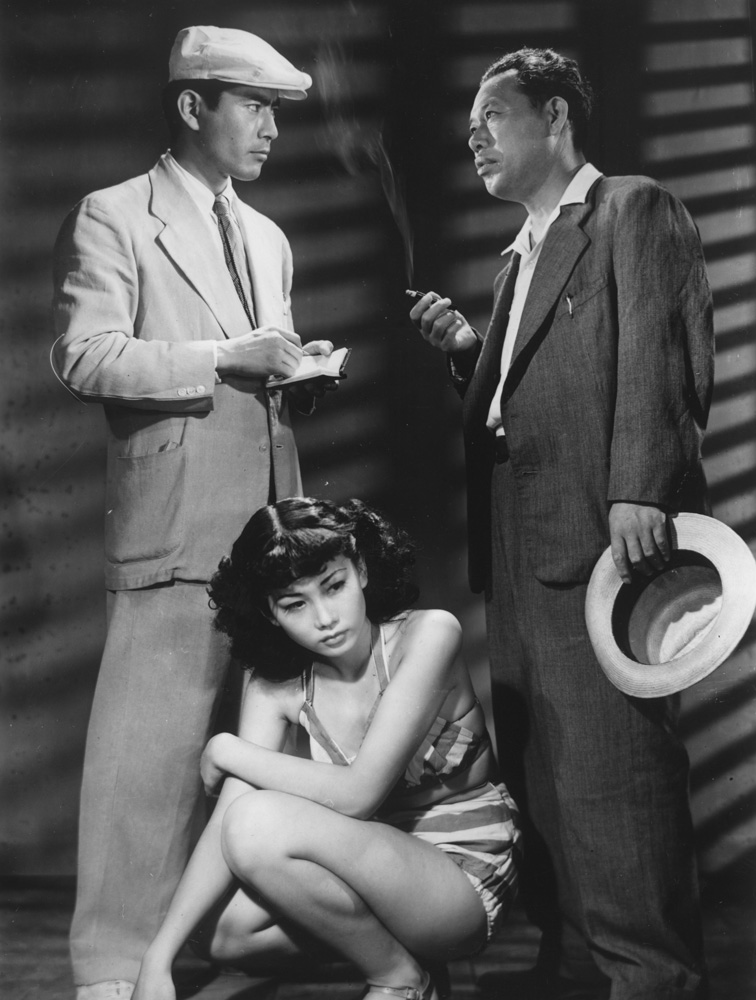
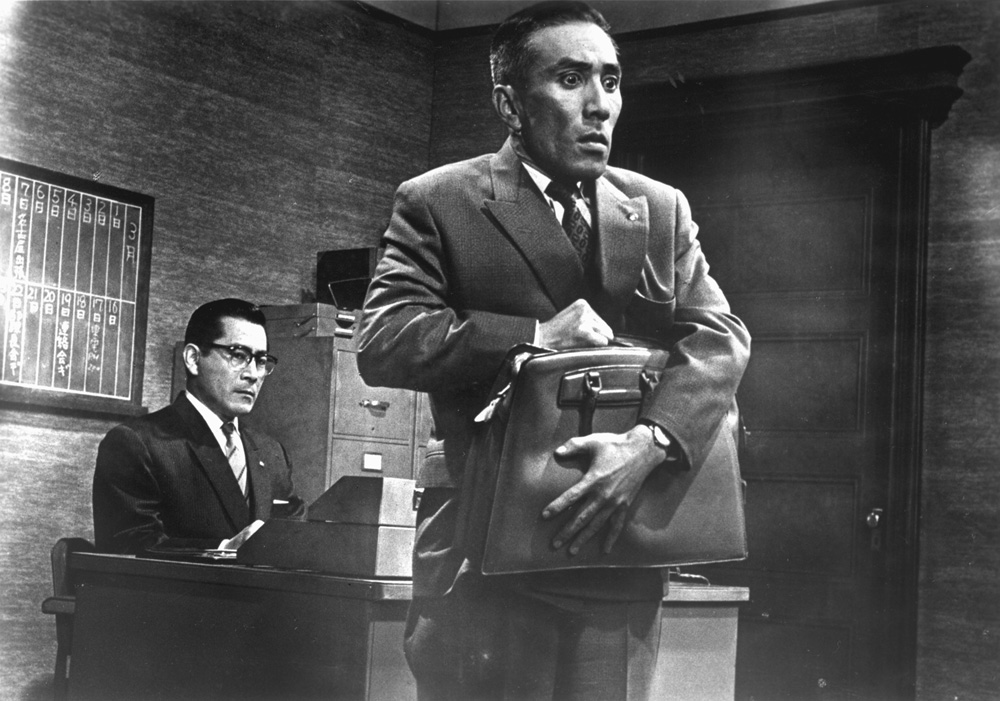
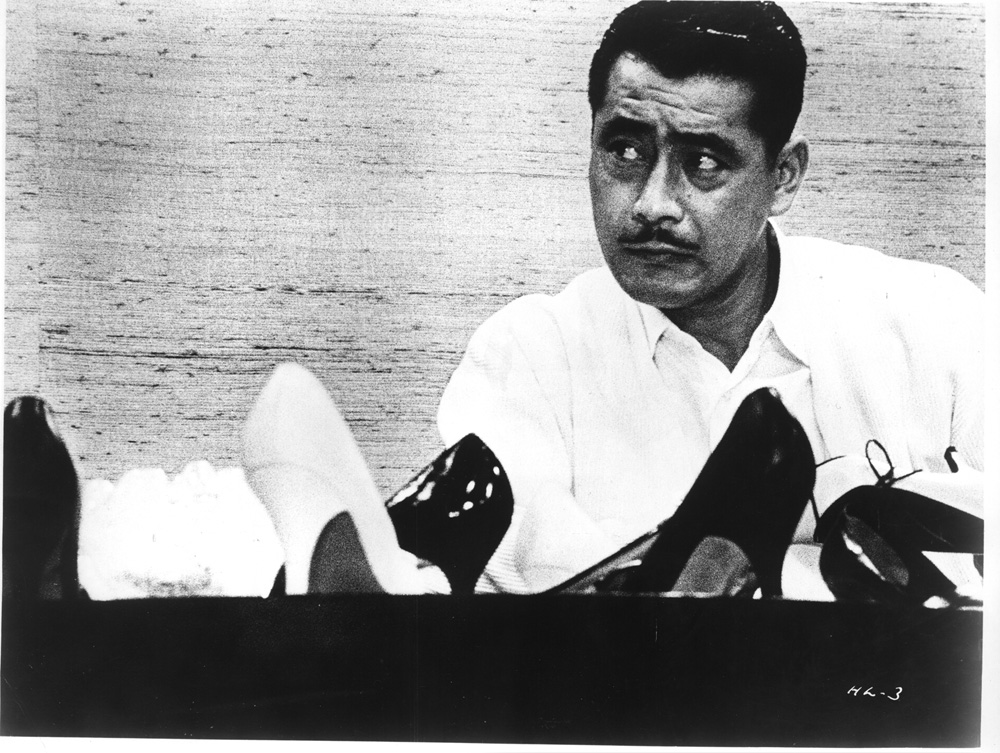
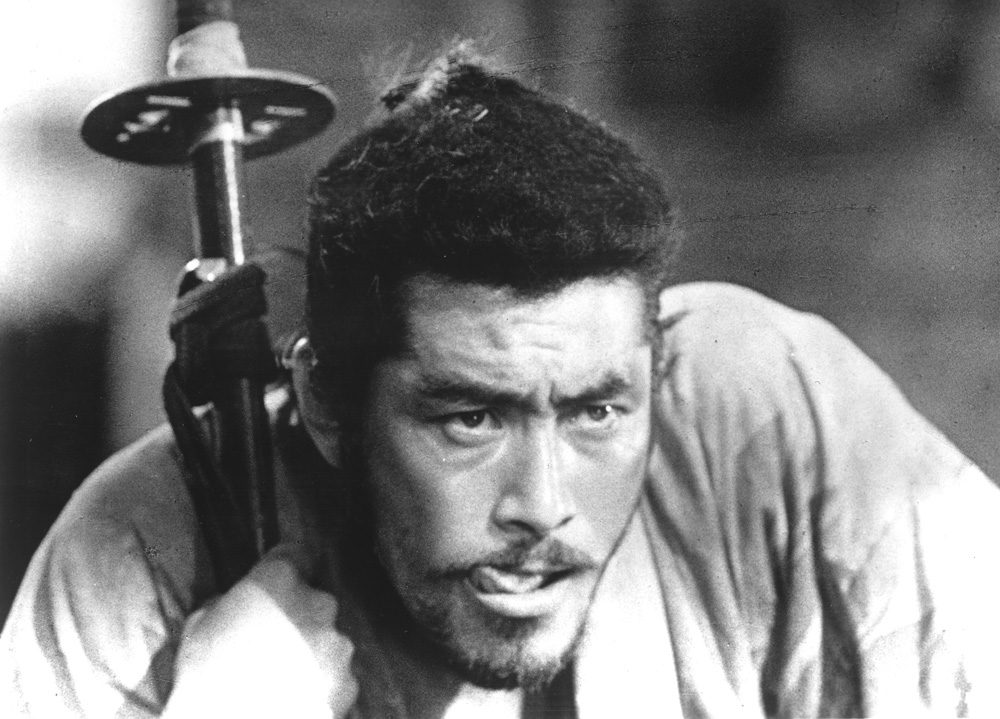
Was digging through some old production stills and found these featuring the legendary Toshiro Mifune. Enjoy (click to enlarge).

1949's Stray Dog with Takashi Shimura (and the very hot Keiko Awaji, between).


From The Bad Sleep Well (1960). That's the great character actor Ko Nishimura on the right. Mifune's character is slowly, methodically driving him insane.


From the taut kidnap thriller High and Low (1963), my hands-down, all-time favorite Kurosawa picture.


As farmer-cum-swordsman Kikuchiyo in Seven Samurai (1954).


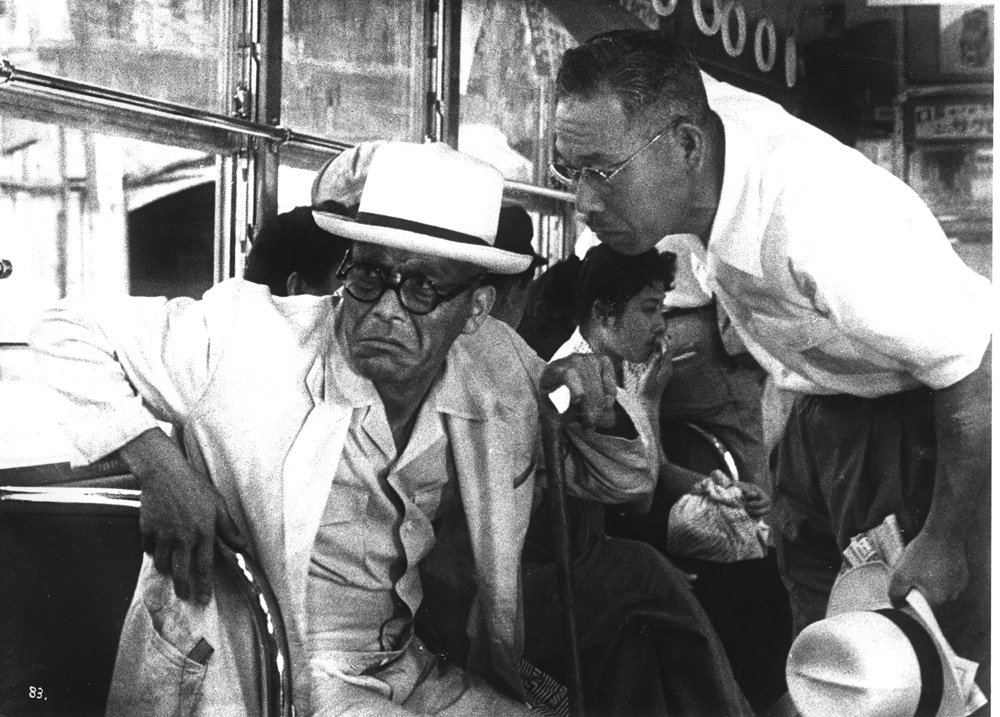
One year after Seven Samurai, Mifune transformed himself into a paranoid, A-bomb-obsessed old man for I Live In Fear (Takashi Shimura, right).

Friday, March 13, 2009

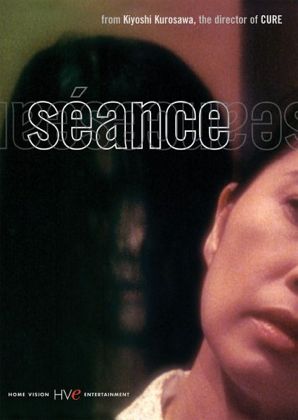
Seance

Of the half-dozen Kiyoshi Kurosawa films I've seen, he either hits it out of the park (Cure, Pulse) or makes a muddled mess (Charisma, Doppelgänger). One exception, however, is Seance, which is a little of both (leaning heavily towards the muddled mess side of the equation). While the film has its moments, the principle issue is that, in attempting an interpretation of the 1961 novel Seance on a Wet Afternoon by Mark McShane, the director strays so far from the source material that when he finally gets around to addressing it, the incongruities in plot and characterization completely undermine the film.

In the original story, an ambitious medium decides to advance her career by perpetrating a kidnapping and then helping the police solve the case. In Kurosawa's film, the Japanese lady psychic has no such intentions, and only hits on the idea once a little girl, kidnapped by someone else, appears in an equipment case belonging to her sound engineer husband (how the kid gets in there is another problem with the film, a twist to beggar anyone's willing suspension of disbelief).

On the plus side, there's Kurosawa's go-to guy, the always-great Koji Yakusho as the psychic's supportive yet beleaguered husband. And there are certainly some creepy moments, particularly after the couple inadvertently kill the little girl. However, the film is ultimately defeated by what my Stone Bridge Press label mate Jerry White calls (in his The Films of Kiyoshi Kurosawa) the director's "sometimes unfortunate disregard for narrative coherency." Seance comes nowhere near Pulse, Kurosawa's apocalyptic ghost epic. It's a small film, smaller than it should be, and will only appeal to fans of this sometimes-great director.