Saturday, January 16, 2010

Bushido: The Cruel Code of the Samurai

Back in August '09, I posted my review of Tadashi Imai's Cruel Tales of Bushido. Now I've gotten hold of an advance copy of AnimEigo's DVD release (out February 9th) re-dubbed Bushido: The Cruel Code of the Samurai. As with all AnimEigo releases, the disk is packed with historical and cultural information in the form of supplemental notes and essays, as well as explanatory supertitles above particularly idiomatic/referential subtitles. In short, the package is a Japanese history nerd's dream. And speaking of Japanese history nerds, my boy Randy Schadel from the Samurai Archives provides one of his typically voluminous pieces on the disk, a definite value-add.

Even if you're not all that interested in Japanese history, you'll still find this film an unforgettable experience and a unique look into a centuries-old martial culture. Plus it's a great showcase for the talents of the great Kinnosuke Nakamura, here portraying seven different roles to devastating effect. Needless to say I'm overjoyed to see this true classic of Japanese cinema receiving the long-overdue DVD release it deserves.

Friday, January 8, 2010

The Beast Stalker

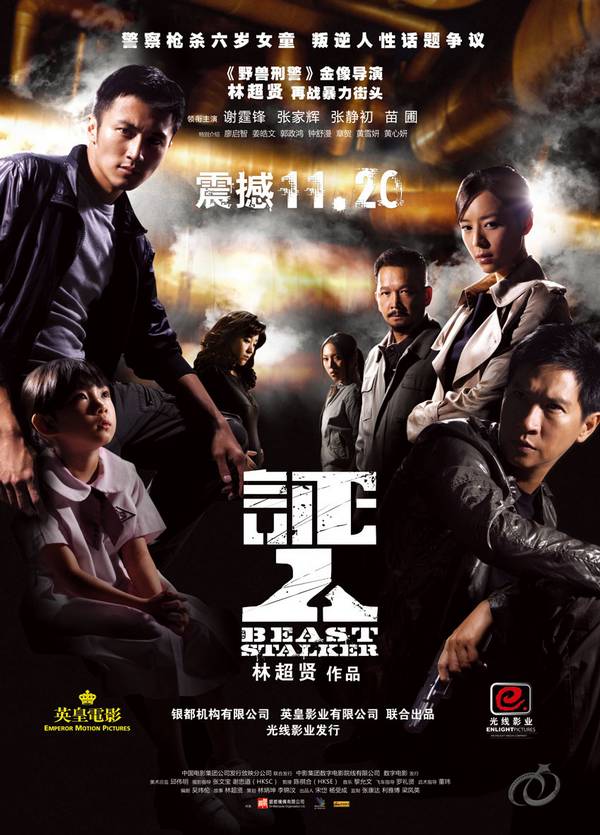
This top-notch, edge-of-your-seat Hong Kong crime thriller from 2008 packs more than a couple of emotional gut-punches. For the record, these come primarily from fucked-up things happening to little kids. While I'm not a big fan of the killing, kidnapping and general endangerment of children in film, here it's done -- dare I say tastefully? Certainly effectively, adding an extra layer of involvement for the audience beyond the standard police procedural and action elements.

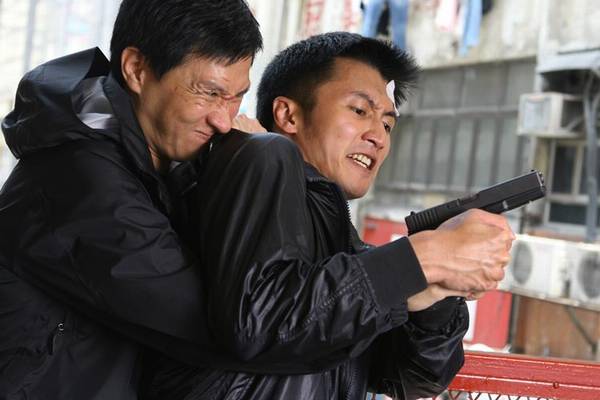
The story pivots on a singular, multi-vehicle traffic collision from which the various characters emerge, their faces scarred, their lives entangled, forever changed. Except one, a little girl, her tiny body pierced by the bullets of a well-meaning cop in pursuit of a crime boss (the chase leading up to the crash). Sadly, wee Yee won't be growing up any time soon. Of course the cop, Sergeant Tong (Nicholas Tse, above right), will never get over it, so when the dead girl's sister is kidnapped, he's doubly motivated to save the little tyke and make some kind of amends to the mother (Zhang Jing Chu) and the universe at large. He's in for a rough ride, though; the kidnapper, Hung (an electrifying Nick Cheung, above left), is an elite ex-assassin, lightening fast and smart as a whip. He'll give Sergeant Tong a run for his money ...

The Beast Stalker director Dante Lam employs hand-helds and steady cams to create a kinetic, P.O.V. style that drops you right into the breathless action. Nice to see Hong Kong cinema getting back to gritty after the string of super-slick, Hollywood-style outings that characterized the post-handover era. The film won several awards in 2009 including the Hong Kong Film Critics Society Award for Best Actor for Nick Cheung. More good news: Beast Stalker 2 (working title) just finished shooting in Hong Kong last week, so keep an eye out for that one (will premier over there this Summer). The follow-up film isn't a sequel -- the two male leads swap roles (Tse is the criminal, Cheung the cop) -- a far more intriguing proposition.

If you're in Europe or Japan, you'll be able to rent/purchase The Beast Stalker tout de suite -- it was released on region-2 DVD by Cine-Asia on January 4th. If you're in the US, you're in good shape -- it's been out on disk since May, 2009. As for the inevitable Hollywood remake, well, let's just hope they don't wreck it ...

Thursday, January 7, 2010

Kurosawa Centenial

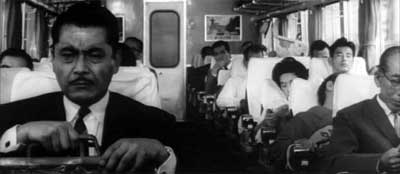
If you're in the NYC area, why not celebrate Akira Kurosawa's 100th birthday with a film? From January 6th through February 5th, the Film Forum is showing 28 of the master's films including my personal favorite, High and Low (above, playing January 22nd). I also recommend the seldom-seen The Idiot (1951) playing January 17th and Men Who Tread on the Tiger's Tail (1945) on the 19th.

Sure, Criterion has released lots of these pictures on DVD, but I don't have to tell you how much difference the big screen still makes, especially in regards to the compositional skills of an artist like Kurosawa. Maybe when our LCDs get to be 300 inches, we can all stay home, but for now, get thee to the Forum!

Tuesday, December 29, 2009

Thirst

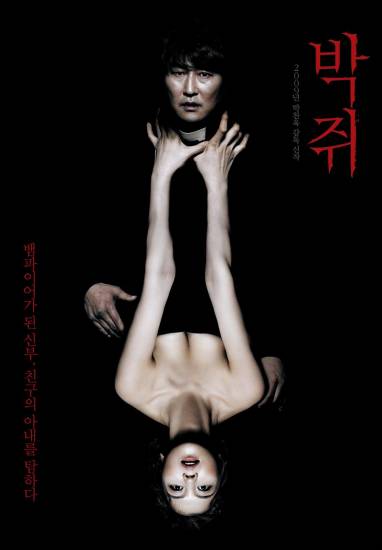
Who says vampires can't get it on? Not me, and certainly not Park Chan-wook, Korean auteur extraordinaire (The Revenge Trilogy, JSA, Three ... Extremes). He's also jettisoned the whole fang thing, but otherwise the standard lore is in place (the blood is the life, no sunshine, superhuman strength, etc.). And yet this one element, sex, opens things up considerably, plot-wise, making for a more intimate, complex and unpredictable story of a man, a woman, and their sexual/vampiric relationship.

The man in question, a Catholic priest named Sang-hyun (Korean superstar Song Kang-ho), volunteers to become infected with an ebola-like virus as part of a drug trial in Africa. Sang-hyun (get it? Sang is French for blood) is inadvertently transfused with some vampire blood that keeps the virus at bay, but, of course, makes him a vampire in the process. In keeping with convention, Sang-hyun's genesis involves a heightening of the senses, but this time out, that extends into his pants. Yes, in addition to a newfound thirst for blood, he discovers he's also got a hankerin' for some good old fashioned poontang. This leads him to pretty yet troubled Tae-ju (Kim Ok-bin) who becomes his first girlfriend (although she's married to someone else ... ). However, Sang-hyun never fully abandons his moral nature, and his inner conflict, reminiscent of Louis from Interview with the Vampire, makes his character that much more compelling.

What I found most striking about Thirst was the way the film defied my expectations. I've seen a lot of vampire films, but this one kept me off balance throughout. Park Chan-wook takes the "rules" of vampirism (clearly borrowing from Anne Rice) and turns them sideways, defying audience expectations while working within the parameters of the genre. As I say, he brings human sexuality into the mix (thus eliminating the need for the penetrating fang), and we all know how complicated things can get when that happens. The line between human and vampire is blurred to the point where genre predictability is all but obliterated.

Thirst won the jury prize at the 62nd Cannes Film Festival last Spring, the second Cannes award for Park Chan-wook (he got one for Oldboy in 2004).

Wednesday, December 23, 2009

Total Film's 60 Greatest Movie Books

Guess who made the list? Asia Shock is #23.

A particular kick, as this is my favorite Brit mag. I even went to the considerable expense of securing a subscription. I also enjoy sending them insulting emails castigating their staff for occasional mistakes regarding Asian film. Being British, this is no doubt the reason for their warm embrace.

Anyhow, thank you, Total Film!

The Good, the Bad, the Weird

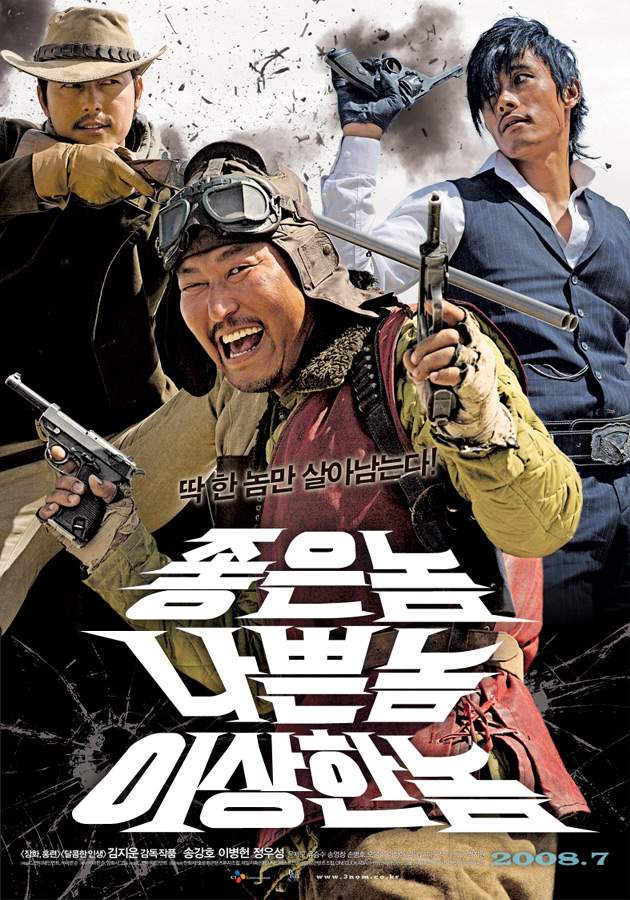
Kim Ji-woon does it again (see previous post). This time out, the genre-hopping Korean director serves up a heapin' helpin' of what I would call "kim chee ramen western." Yes, in an affectionate nod to the Dollars Trilogy of Sergio Leone, Kim delivers a fast-paced, wildly exotic horse opera set in Manchuria in the 1930s filled with gun-slinging Chinese outlaws, opium-smoking prairie prostitutes, marauding Korean bandits, thieves, psychos and revolutionaries ... oh, and the Japanese Imperial Army, all in constant motion via motorcycles, trains, trucks, jeeps and, of course, horses. Lots of horses.

At the center of it all is the irrepressible Song Kang-ho (The Host, The Quiet Family, The Foul King, Thirst, JSA, Secret Sunshine, Sympathy for Mr. Vengeance, Memories of Murder, etc. etc.) as Yoon Tae-goo, The Weird. While robbing a train he comes into possession of a treasure map (which becomes the operative MacGuffin of the piece). He's a two-pistol shooter, greasing, hmm, maybe 100 guys throughout the picture? 200? (The mortality rate in this movie is off the chart.) Then there's Jeong Woo-seong as The Good (a bounty hunter named Park Do-won), doing a slick Korean version of Clint Eastwood. And finally we have Lee Byeong-heon as The (very) Bad Park Chang-yi, channeling a sinister Alain Delon by way of Prince (trust me, it works -- you've just gotta see it). These guys go round and round, winding up in a three-way standoff similar to their original counterparts in the film's namesake. Along the way we get many an homage to the Leone trilogy including a scene involving metal plating used as a bullet-proof vest, as well as a bit where someone's hat is shot off, then continually shot out of reach.

Kim Ji-woon was also influenced by Eastwood's Unforgiven (1992). "I wasn't particularly aiming to make the Western genre popular in Asia," he told an interviewer at Cannes last Spring. "It's enough that I can revive the Manchurian Western genre in Korea."

There's so much lead flying through the air in The Good, the Bad, the Weird, it could pass as a weather condition. Some might feel the action sequences go on a bit; that all depends on how you feel about action sequences. Fortunately, Kim's are the best in the business: Inventive, thrilling, outrageous. My advice is don't fight it, just sit back, relax, and let the madness sweep over you. As contemporary Korean westerns go, you really can't do better.

EDIT: I recently purchased this DVD of the film. It's the shits. Terrible, blurry transfer. Clearly somebody downloaded a low-res, compressed version, pressed it on disk and distributed it to vendors who don't bother to check out their foreign titles. DO NOT BUY THIS DISK.

Friday, December 18, 2009

A Bittersweet Life

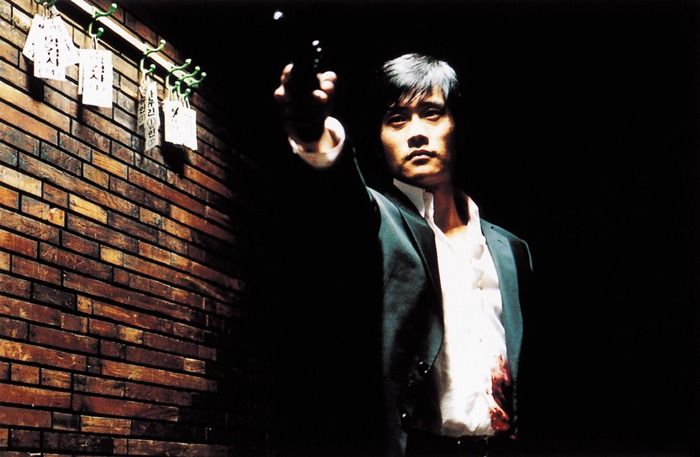
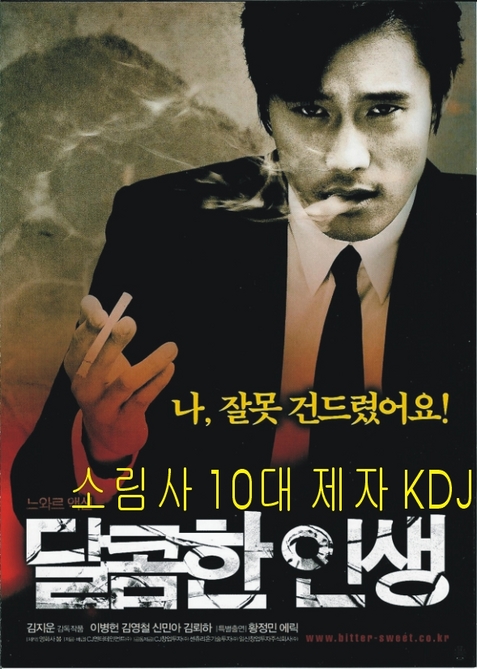
Korean director Kim Ji-woon is one bad mutha ... [**Shut yo mouth!**] Only talkin' 'bout Kim! The guy defined family-based black comedy with The Quiet Family (1998). Then he went all freaky deaky K-horror on your ass in A Tale of Two Sisters (2003). And here, in 2005's A Bittersweet Life, he proves he can make operatic gangster pictures with the best of 'em. Lee Byeong-heon (JSA, Three ... Extremes) stars as Sun-woo, a suave mob enforcer who finds himself on the shit list not only of a rival gang, but that of his own boss. (The latter tends to happen when the boss asks you to look after his hot young girlfriend, even when you don't make a move.) Before long our boy finds himself being beaten, stabbed, shot, even buried alive. This doesn't sit well with him, his thoughts turning to revenge. To do the job right, he's going to need more than the standard array of melee weapons commonly used by Korean gangsters -- he'll need firepower and lots of it. Sun-woo's quest for guns takes him on a bizarre odyssey, the film's only comedic set piece, featuring one of the goofiest looking guys in Korean cinema, Oh Dai-soo (Oldboy, A Bloody Aria). A Bittersweet Life hits all the right notes. Slick urban settings mask what is essentially a cruel tale of bushido similar to Japanese films like The Secret of the Urn or, indeed, Cruel Tales of Bushido: A trustworthy retainer is subjected to the whims of a capricious lord and made to suffer for being nothing less than a paragon of loyalty. Blend this with Korean cinema's uniquely kinetic flair for screen violence and you've got one hell of an exciting picture. Lee Byeong-heon is on fire, one minute pouncing like a jungle cat, the next blasting away like some Peckinpah anti-hero. I picked up A Bittersweet Life on a region-2 Tartan Asia Extreme disk back when Tartan was still a UK entity. It can still be had as a Japanese import, but let's hope the new US-based Tartan Palisades label decides to release it here. If you like Asian gangster films, you'll definitely want this one in the collection.