Thursday, March 22, 2007

Assorted capsule reviews

I'm hard at it, writing the follow-up volume to Stray Dogs & Lone Wolves, my samurai film book, so I'm behind on my blogging. Here are some films I've seen recently. Bare with me ...

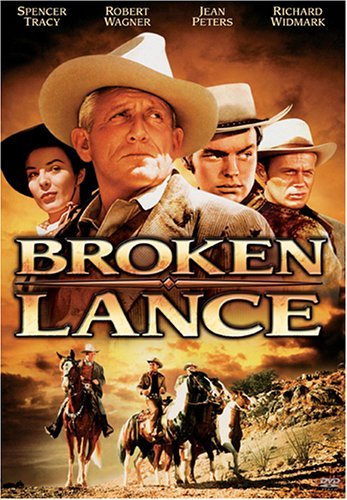
Broken Lance
Edward Dmyrtyk borrows from King Lear, but not nearly enough to make this horse opera rise above the level of, well, horse opera. Spencer Tracy's hot-headed cattle baron and his sons (male versions of Regan, Goneril and Cordelia plus Earl Holliman as a superfluous, dimwitted fourth brother) remain flat western stock characters throughout and the film falls in upon itself from the sheer weight of its mundane MGM melodrama.

The Battle of Algiers
This electrifying cinema verite-style depiction of the struggle against French colonialism in 1950s Algiers is an eye-opening experience for anyone trying to make sense of headlines coming out of Iraq, Afghanistan or Israel -- and it was released 40 years ago! A virtual textbook on revolution, insurrectionary violence, and police state retaliation, Battle of Algiers is shockingly frank in its depiction of shootings, bombings and torture (on both sides), taking a cold, hard look at foreign occupation and what happens when the occupied decide enough is enough.

Modesty Blaise
Monica Vitti, Terrence Stamp, Dirk Bogarde, psychedelic 60s style and decor, exciting European locations and camped-up crime capers -- a home run, right? At first yes, but Joseph Losey is a bit out of his depth here, and the demands of a demented action romp/comic book adaptation begin to seriously tax his abilities in the third act, by which time the energy has all but dissipated and the film limps through what should have been a thrilling climax (a la Danger Diabolik). Perhaps Losey should have stuck to low-key psychodramas and left this one to Mario Bava?
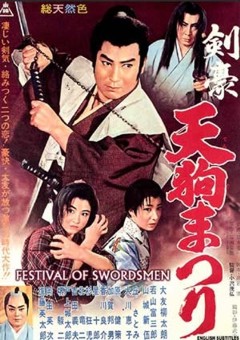
Festival of Swordsmen
Samurai action and melodrama blend in this 1961 Toei offering featuring Ryutaro Otomo and Tomisaburo Wakayama as rivals who compete with swords as well as their hearts -- they're both in love with (and loved by) the same woman. There's also a tough jujitsu babe/cross-dressing princess that's got her eye on Otomo plus a whole slew of martial artists converging on Tokyo for a big competition before the Shogun. Everyone wears a ton of makeup and there's a general MGM feel, compared with the more gritty Daiei chambara of the same period (think Warners). Conventional yet solid samurai entertainment.

G.I. Samurai
It's a sprawling Sonny Chiba/Haruki Kadokawa thing, very big, very epic (142 minutes). Basically you've got The Chiba and his men going up against Sengoku-jidai warlords like Shingen Takeda with a tank, an APC and a bunch of guns, grenades and mortars. Of course he gets his ASS KICKED by his kickass forebears. Not bad, but the whole thing is awash in horrendous 70's sensitive singer-songwriter-type music: Lots of inappropriate ballads pouring like honey over scenes of carnage, that sort of thing. But over all, quite entertaining, and an interesting cultural take on Japan's martial history.

Friday, March 2, 2007

30th Portland Intl. Film Festival Pt. 2

While I enjoyed The Host (2006) for the most part, it was thin on the ground, story-wise. For a film like this, you need more characters, need to get some sub-plots to cross-cut to. Going back and forth between the vigilant family (widowed dad, loser son, estranged son, plucky Olympic archer daughter) and the girl in the monster's lair just got tedious after awhile. Why not add something like, I don't know, an intrepid father and son team on their own mission to save the girl? Old dad is a scientist friend of the other dad, the son a heroic love interest for the girl's archer aunt, played by Bae Doo-na (South Korea's Meg Ryan -- she was in Sympathy for Mr. Vengeance). Or you could always have a team of commandos who get picked off one by one in the tunnels; tired, yes, but I bet a Korean director could get a lot more mileage out of such a well-worn trope and find some new and hideous ways to dispatch the obnoxious yet hapless team of macho jerkoffs. Anyway, you see what I'm saying -- the film needed to have more going on. But I read an interview with the director and he said the film was first and foremost a family drama, so I guess he wanted to keep the focus on them. And the monster is fantastic.

Always great to see Song Kang-ho, and he did a great job as usual. His specialty seems to be lovable losers. I just got the DVD and it was better the second time around, so perhaps you should disregard everything I've said ...

Thursday, February 15, 2007

30th Portland Intl. Film Festival Pt. 1

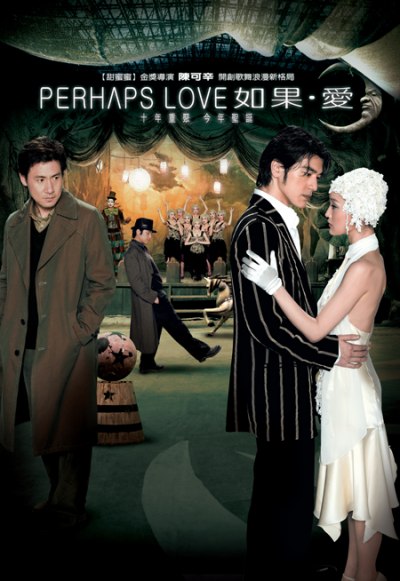
So I thought I'd keep an open mind and catch a Hong Kong musical. Unfortunately Perhaps Love (2005) wasn't my cup of tea. The first act features all the big production numbers; the second and third acts telescope in to the boy meets/looses/gets/discards girl love story. Ho hum. I liked some of the song lyrics, classically Asian musings on eternal verities like the unity of opposites and the impermanence of material things, all set in an otherwise very Western tradition of song 'n dance, but after awhile there was nothing to get my teeth into. No murder, no sex, no revenge, nobody hefting a body into the trunk of a car, none of the things I like!

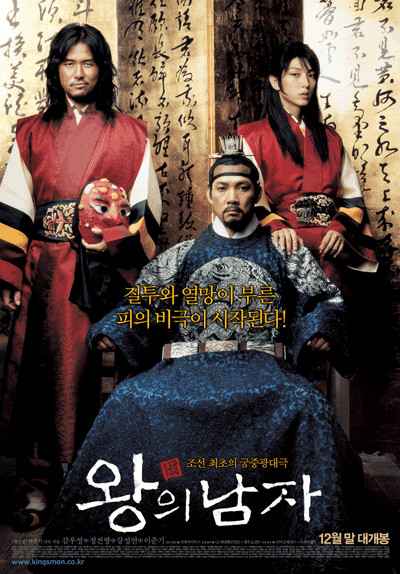
South Korean historical romp King and the Clown (2005) made for heartier fare, but it started to sag halfway through, losing sight of its most interesting character for the sake of a dreary affair between a kooky king and his ladyboy lover. Woman on the Beach, another South Korean entry from 2006, provided some well-rounded characters and funny moments, but was ultimately an arthouse nonevent about some people eating, drinking and screwing in a small seaside town. Here's hoping things look up next weekend. Should do; at the very least I'll get to see The Host!

Wednesday, January 31, 2007

The Human Condition

It's a crying shame that one of the great films of world cinema, Masaki Kobayashi's immortal World War II saga The Human Condition (1959 - 61, Shochiku Studios) is unavailable on DVD. US-based Image Entertainment had previously offered this epic nine-hour, three-film opus but has shamefully let it drop from their catalog. Film enthusiasts worldwide are the poorer for it.

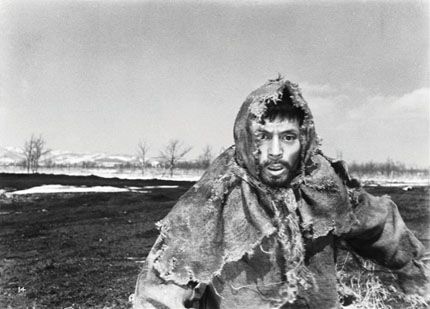
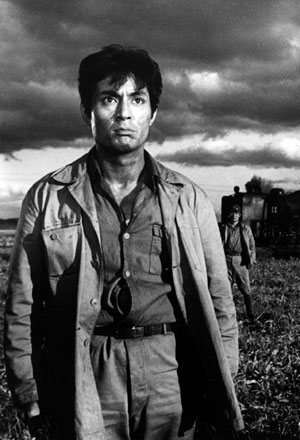
The Human Condition trilogy follows the trials and tribulations of pacifist and conscientious objector Kaji (Tatsuya Nakadai) as he struggles to preserve his dignity and sanity amid the various horrors of enlisted service during World War II. In the first film, No Greater Love, Kaji is sent by his company to Japanese-controlled Manchuria where he witnesses the deplorable living conditions and suffering of Chinese slave laborers put under his charge. His attempts to treat these men with respect result in his being tortured, charged with conspiracy and sent to active duty. Part two, Road to Eternity, follows Kaji as he endures active duty (and the cruelty of his fellow officers) in the Imperial Japanese Army. In part three, A Soldier's Prayer, Kaji is captured and interned in a Siberian POW camp, eventually to escape into the frozen white wasteland ...

The character of Kaji is a stand-in for director Kobayashi, himself drafted in January of 1942. Unlike directors who would later become his contemporaries (like Akria Kurosawa), Kobayashi spent four years as a soldier in the hell that was WW II. The Human Condition is his passionate castigation of war and martial culture, and a revelation for anyone who thought the Japanese people supported the war en masse. Tatsuya Nakadai is devastating as Kaji, his large, soulful eyes communicating the earnest decency of his character, caught as he is in an impossible situation. Nakadai was discovered by Kobayashi, and the role of Kaji brought him to the world's attention for the stellar talent he is -- his performance is simply shattering.

The Human Condition is one of those films that should be seen by everyone. What a pity then, that it is unavailable on DVD to be seen by anyone.

Thursday, January 11, 2007

Nice piece in the SF Chronicle

I grew up in San Francisco, and the SF Chronicle was always the paper in the house. So this article is particularly gratifying. I should be at my favorite SF watering hole with a bunch of friends, celebrating my good press. Meanwhile I'm buried under a snowdrift 500 miles north in Eugene, Oregon. What's wrong with this picture? When I was down in SF last month it was sunny and in the mid-50s every day. Hmm ...

Friday, January 5, 2007

Rue Morgue digs Asia Shock!

I was overjoyed to open the Jan/Feb 2007 issue of Rue Morgue Magazine and find Asia Shock in a sidebar of the feature article. I put a scan here.

Tuesday, January 2, 2007

Violent Cop

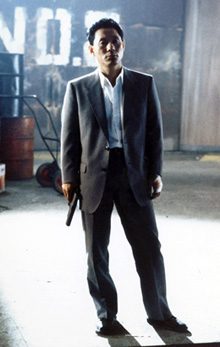
I watched "Beat" Takeshi Kitano's directorial debut Violent Cop (1989) again after many years, and was amazed by how much better it was than I'd remembered. The first Beat Takeshi film I ever saw was Sonatine (1993), and I, along with many an unfortunate yakuza in that film, was completely blown away. I saw Violent Cop soon afterward, and the difference in style caused me to regard it an inferior early work; indeed, in contradistinction to the refinement, the existential stillness and Kubrickian pacing of Sonatine, Violent Cop seemed somehow tawdry and base. But I was hasty in my judgment. Now, after years and hundreds of Japanese films (including a few more from Kitano), I can say that Violent Cop is a terrific film that stands on its own merits. It is also a tribute to Kitano's abilities as a fledgling director, stepping in as he did when the original director, Kinji Fukasaku, stepped out due to scheduling conflicts (the two finally worked together a decade later on the mind-bendingly bloody ballet that is Battle Royale).

Returning to Violent Cop was like finding the source of a river; from here would flow and expand various themes and recurring imagery in subsequent features, such as the long take on the stone face, the sudden, unexpected bursts of punishing brutality, and Kitano's enigmatic film presence itself -- stoic, unpredictable, and immovable as a mountain. After Fukasaku's departure, Takeshi extensively rewrote the shooting script for Violent Cop, making it his own. For example, he added long sequences of himself walking (another recurring image in his films), his hurried, bowl-legged stride somehow menacing when colored by his character's explosive physical assaultiveness. When an interviewer later asked about the prevalence of walking sequences in his films, Kitano reportedly joked, "Because that's part of the TV cop show formula." Really, it's a way of communicating the energy of the central character; compare the walking shots of Lee Marvin as Walker in John Boorman's Point Blank (1967). Other recurring Kitano film elements include the aforementioned existential calm at the heart of the maelstrom and the appearance of a gay character, not exactly a commonplace in Japanese film.

Now I think I'll move forward from Violent Cop through the rest of Takeshi Kitano's filmography, in chronological order, to follow the development of his filmmaking style through the 90s to the point when his films start to falter in the early 2000s.