Tuesday, May 8, 2007

50th Annual SFIFF


I could only stay for the first week of the San Francisco International Film Festival, but I was determined to see as many Asian films as possible. Here are the films I saw:

Ad Lib Night
After This Our Exile
Aria
Ghost Train
Hana
The Heavenly Kings
Mukhsin
The Old Garden
Paprika
Pather Panjali
Singapore Dreaming
Stories from the North
Tuli
Vanaja

I encourage you to follow the links above and check out the trailers. Most of these films were fantastic, a few fairly snoozable. I wrote a piece for the Portland-based Asian Reporter, showcasing what I felt were the standout films. I'll put a link here once that article is online. (BTW, I also caught All in This Tea, a likable Les Blank doc about Chinese tea, and Black Sheep, kind of a remake of Peter Jackson's Dead Alive, only with sheep.)

Tuesday, May 1, 2007

Ghost Train


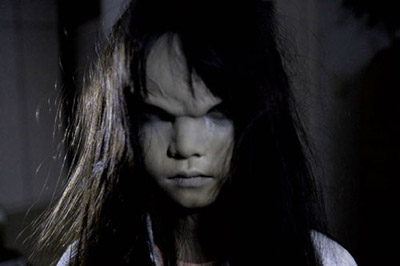
I'm currently attending the 50th Annual San Francisco International Film Festival, seeing a lot of Asian films, and since this blog is called Asia Shock, I really must say a few words about Ghost Train. The film was directed by Takeshi Furusawa, former assistant director to existential horror auteur Kiyoshi Kurosawa. This innovative shocker concerning a haunted subway station in Tokyo and the vortex of evil that lies down one of its connecting tunnels, utilizes a combination of unnerving sound design, memorable facial prosthetics, and a subtle yet definite (for those hip to such things) H.P. Lovecraft influence. The cumulative effect is one of amped-up J-horror that pushes the fright factor to the next level. Released in 2006, Ghost Train is already available on DVD in Asia; since ADV Films is releasing it to the SFIFF, a domestic ADV DVD release should follow soon. Don't miss it!

Tuesday, April 24, 2007

Naruse


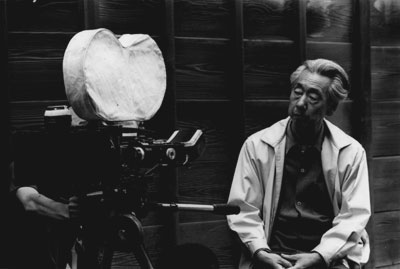
Many a great Japanese director was a miserable bastard. One long-neglected master is Mikio Naruse, whose films are finally starting to get released outside Japan (Repast, Flowing, and Sound of the Mountain from UK distributor Eureka and a recent Criterion release, When a Woman Ascends the Stairs, in the US). Great films, very low-key, somewhere between Ozu and Mizoguchi; you've got the home drama aspects of the former and the long-suffering female protagonists of the latter. But while Ozu offered resignation and Mizoguchi transcendence at the end of their respective films, Naruse offers neither, leaving his female protagonists to twist in the wind. It is only their Japanese fighting spirit that keeps them going, facing out the long days of desolation dangling over the abyss of depression and meaningless existence. Unwatchable? No fear, the films have a subtlety and realism that diffuses any direct slit-your-wrists vibe, but there's no doubt the director was channeling a lot of his own downheartedness into his films. By all accounts, Naruse was the most miserable and depressed director in Japanese film history. Nicknamed "Yaruse Nakio" (which I'm told translates as "Mr. Disconsolate"), at Toho, his one hobby was drinking alone. His only social interaction was with the women who served him his drinks at cheap eateries, one of whom fell in love with him and subsequently committed suicide when he failed to respond to her letters (an event that further clouded his personal reputation). But his films are superb in their way, stark and moving. When you watch them, you realize that here is an auteur with an ouvre who's been standing alongside the greats all this time, his work shamefully overlooked. I urge everyone to see at least one film by this fine filmmaker.

Monday, April 23, 2007

Bambi vs. Godzilla

BTW, I'm heartily enjoying David Mamet's latest book, Bambi vs. Godzilla: On the Nature, Purpose, and Practice of the Movie Business. Packed with anecdotes and obscure classical/religious/historical references, the book is, at turns (sometimes sentence by sentence) pithy, withering, heartfelt, political, castigating, wise and arrogant (in a good way).

Cry of the Lame

I'm such a lame blogger. I should be here every minute, pouring out my impressions and insights, but what do I do instead? Read books, watch films, drink sake, write books ...

But I am a web veteran -- I was a webmaster back in '97 and landed my first dot-com job in '98. Worked 'til the crash. So I'm no technophobe. Maybe it's just a personal backlash. I'm also not a terribly consistent poster on the two message boards I frequent, Ninja Dojo and Samurai Archives Citadel. Oh well.

I'm heading down to San Francisco this week for the San Francsico International Film Festival. I'll be posting stuff about that, as well as writing a piece on it for the Asian Reporter. Watch this space.

In the meantime, here are some interesting things that have drifted through my transom of late:

Cherry Blossom Eiga - Very cool Japanese cult film site.
Nikko Edo Mura - The samurai theme park I must visit next time I'm in Japan.
Hiroyuki Sanada Enthusiast - All things Hiroyuki Sanada including clips from Danny Boyle's Sunshine, which features this coolest of cool Japanese actors.
Voice of Gojira: Remembering Akira Ifukube - Good piece on one of the most prolific film composers of all time.
Asia Shock review - Gratifying piece courtesy of the good people at The Thunder Child.

Thursday, March 22, 2007

Assorted capsule reviews

I'm hard at it, writing the follow-up volume to Stray Dogs & Lone Wolves, my samurai film book, so I'm behind on my blogging. Here are some films I've seen recently. Bare with me ...

Broken Lance
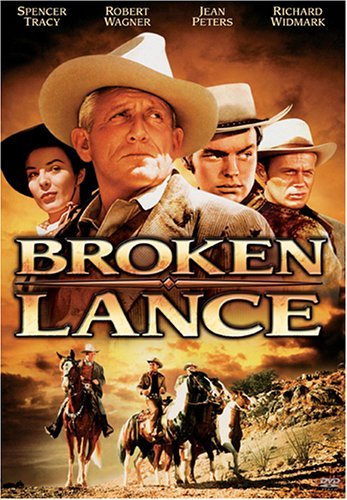
Edward Dmyrtyk borrows from King Lear, but not nearly enough to make this horse opera rise above the level of, well, horse opera. Spencer Tracy's hot-headed cattle baron and his sons (male versions of Regan, Goneril and Cordelia plus Earl Holliman as a superfluous, dimwitted fourth brother) remain flat western stock characters throughout and the film falls in upon itself from the sheer weight of its mundane MGM melodrama.

The Battle of Algiers
This electrifying cinema verite-style depiction of the struggle against French colonialism in 1950s Algiers is an eye-opening experience for anyone trying to make sense of headlines coming out of Iraq, Afghanistan or Israel -- and it was released 40 years ago! A virtual textbook on revolution, insurrectionary violence, and police state retaliation, Battle of Algiers is shockingly frank in its depiction of shootings, bombings and torture (on both sides), taking a cold, hard look at foreign occupation and what happens when the occupied decide enough is enough.

Modesty Blaise
Monica Vitti, Terrence Stamp, Dirk Bogarde, psychedelic 60s style and decor, exciting European locations and camped-up crime capers -- a home run, right? At first yes, but Joseph Losey is a bit out of his depth here, and the demands of a demented action romp/comic book adaptation begin to seriously tax his abilities in the third act, by which time the energy has all but dissipated and the film limps through what should have been a thrilling climax (a la Danger Diabolik). Perhaps Losey should have stuck to low-key psychodramas and left this one to Mario Bava?

Festival of Swordsmen
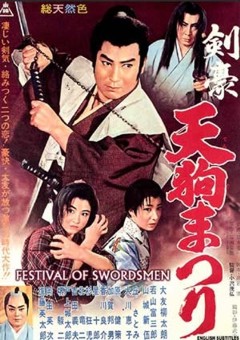
Samurai action and melodrama blend in this 1961 Toei offering featuring Ryutaro Otomo and Tomisaburo Wakayama as rivals who compete with swords as well as their hearts -- they're both in love with (and loved by) the same woman. There's also a tough jujitsu babe/cross-dressing princess that's got her eye on Otomo plus a whole slew of martial artists converging on Tokyo for a big competition before the Shogun. Everyone wears a ton of makeup and there's a general MGM feel, compared with the more gritty Daiei chambara of the same period (think Warners). Conventional yet solid samurai entertainment.

G.I. Samurai
It's a sprawling Sonny Chiba/Haruki Kadokawa thing, very big, very epic (142 minutes). Basically you've got The Chiba and his men going up against Sengoku-jidai warlords like Shingen Takeda with a tank, an APC and a bunch of guns, grenades and mortars. Of course he gets his ASS KICKED by his kickass forebears. Not bad, but the whole thing is awash in horrendous 70's sensitive singer-songwriter-type music: Lots of inappropriate ballads pouring like honey over scenes of carnage, that sort of thing. But over all, quite entertaining, and an interesting cultural take on Japan's martial history.

Friday, March 2, 2007

30th Portland Intl. Film Festival Pt. 2

While I enjoyed The Host (2006) for the most part, it was thin on the ground, story-wise. For a film like this, you need more characters, need to get some sub-plots to cross-cut to. Going back and forth between the vigilant family (widowed dad, loser son, estranged son, plucky Olympic archer daughter) and the girl in the monster's lair just got tedious after awhile. Why not add something like, I don't know, an intrepid father and son team on their own mission to save the girl? Old dad is a scientist friend of the other dad, the son a heroic love interest for the girl's archer aunt, played by Bae Doo-na (South Korea's Meg Ryan -- she was in Sympathy for Mr. Vengeance). Or you could always have a team of commandos who get picked off one by one in the tunnels; tired, yes, but I bet a Korean director could get a lot more mileage out of such a well-worn trope and find some new and hideous ways to dispatch the obnoxious yet hapless team of macho jerkoffs. Anyway, you see what I'm saying -- the film needed to have more going on. But I read an interview with the director and he said the film was first and foremost a family drama, so I guess he wanted to keep the focus on them. And the monster is fantastic.

Always great to see Song Kang-ho, and he did a great job as usual. His specialty seems to be lovable losers. I just got the DVD and it was better the second time around, so perhaps you should disregard everything I've said ...