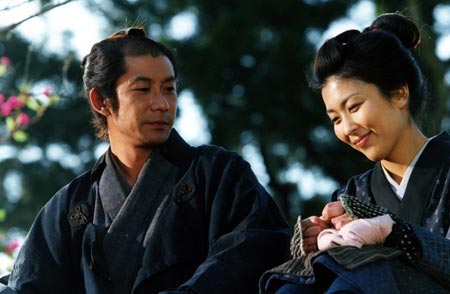
 Hey, if you're in Portland, Oregon on Friday, December 10th and have nothing better to do, why not fall by the Northwest Film Center and take in a samurai film? Namely The Hidden Blade (2004), the second in Yoji Yamada's Samurai Trilogy. I'll be introducing the film; I also wrote a bit about it in Warring Clans, Flashing Blades. There will be a book-signing after the screening, so if you've already bought a copy (god bless you), bring it and I'll sign it. Otherwise, there will be copies available for purchase. See you there!

Monday, November 29, 2010
Pat live in Portland
Hey, if you're in Portland, Oregon on Friday, December 10th and have nothing better to do, why not fall by the Northwest Film Center and take in a samurai film? Namely The Hidden Blade (2004), the second in Yoji Yamada's Samurai Trilogy. I'll be introducing the film; I also wrote a bit about it in Warring Clans, Flashing Blades. There will be a book-signing after the screening, so if you've already bought a copy (god bless you), bring it and I'll sign it. Otherwise, there will be copies available for purchase. See you there!
Wednesday, November 10, 2010
The Secret of the Urn
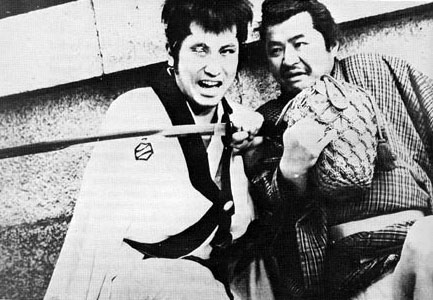 Another film I reviewed in my 2005 tome Stray Dogs & Lone Wolves: The Samurai Film Handbook was The Secret of the Urn (1966). I'm revisiting the film (as well as Destiny's Son) for the sake of Wildgrounds Blogathon 2010, as I feel the film is such a supreme achievement in the genre that it deserves a second look (or first look if you haven't seen it).
The legendary Kinnosuke Nakamura plays a one-eyed, one-armed wild man of a ronin named Tange Sazen. His injuries were received at the hands of a treacherous chamberlain who used the young samurai's loyalty to lord and han for his own nefarious purposes. Now this bakemono (monster, as most who encounter Tange Sazen call him), lives out his days in bitterness and mental instability. But boy can he swing a sword! Into his lap falls a tea urn inscribed with some secret writing leading to a fortune in ryo (gold coins), a million of them to be precise. The urn and gold belong to the Yagyu clan, and they need the one to find the other (the very fate of the clan depends on it). There are other factions and more layers of intrigue which I won't go into here.
The film was directed by Hideo Gosha, one of the Great Ones of samurai cinema. Therefore you have a more realistic level of screen violence (think blood and body parts), innovative use of moving camera, and the general sense of kinetic urgency emblematic of Gosha's style. The Secret of the Urn is an excellent film that also boasts an excellent cast. As with my last two posts, at least one member of the Seven Samurai is present, in this case Isao Kimura (who played the young guy samurai who falls in love with the farm girl). Then there's Seizaburo Kawazu, here playing a machiavellian shogunate official; he was in everything from Yojimbo to Tattooed Life to New Tale of Zatoichi to Mothra. Of particular interest to samurai film nerds is the presence, in a small role, of one Ryutaro Otomo. A Toei studios stalwart of the 50s and 60s, Otomo himself starred as Tange Sazen in at least half a dozen films, his first in 1952. (His version of the character was far more comical and OTT than Nakamura's here.) One wonders how he felt playing a high-ranking magistrate trying to convince Tange Sazen to leave town ...
So there it is. You can get a copy of Secret of the Urn here (you won't find it on Amazon). It's a great film, a fantastic entry in the genre, and just a roaring good time. Oh, and if you're interested in learning more about the character of Tange Sazen, I discuss him at length in my follow up to SD&LW, Warring Clans, Flashing Blades: A Samurai Film Companion.
Friday, November 5, 2010
Destiny's Son
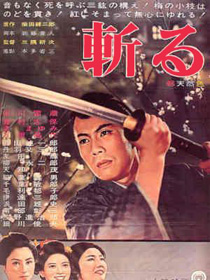 I reviewed Destiny's Son (Kiru, 1962) in my first book, Stray Dogs & Lone Wolves: The Samurai Film Handbook, and it occurred to me that I hadn't seen this wonderful film since then, so I thought I'd revisit it. I'm pleased to say it's lost none of it's magic, none of it's power. If anything, it just gets better each time I see it. A perfect synthesis of Zen and bushido, I can safely say it's among the finest samurai films ever made.
The film stars the immortal Raizo Ichikawa as the proverbial man born under a bad sign. For starters, his mother was beheaded by his father shortly after his birth. No, it's not like that -- she was under penalty of death for having assassinated her lord's mistress (on orders from the chamberlain) and no one in the han was willing to carry out the sentence. She was actually pleased when her husband stepped forth, happy to die at the hand of the father of her child. (Gotta love that samurai class … )
Our hero is adopted by a kind man and raised up to be a good country samurai, but treachery soon rears it's ugly head, sparking a series of cataclysmic incidents that send the young man spiraling into the uncertain life of a wandering ronin. Oh, did I mention he's a brilliant swordsman? Would have to be, right? He's got this great form that so unnerves his opponents, they drop to the floor in exhaustion just trying to find some way to fight him.
This being a Kenji Misumi film, the visuals are gorgeous, the pacing tight, and the fight scenes thrilling. It's also one of three Misumi films I'm aware of where someone gets sliced in half … lengthwise. Yep, from topknot to tail, the guy just sort of flops open. Mind you, it's all very tastefully done, from a distance, so don't expect some horrendous blood bath. Blood is used sparingly in the picture, but effectively.
As for cast, all your Daiei favorites are here: Shiho Fujimura (mom); Shigeru Amachi (dad); Masayo Banri (a fugitive who strips off her clothes to create a diversion, bless her); Saburo Date (a duplicitous retainer) and of course Raizo. Also on hand is Seven Samurai alum Yoshio Inaba (the smiling one), here playing a murderous creep who cuts down Raizo's adopted father and sister.
If you don't feel like waiting for the next Raizo Ichikawa retrospective at your local arthouse to get a look at Destiny's Son, you can pick up a copy here. I can guarantee you won't regret it. And, if you haven't already, why not get a copy of Stray Dogs & Lone Wolves? My original review is better written and more thought out than this on-the-fly blog post. Up to you.
Thursday, November 4, 2010
Vendetta of Samurai
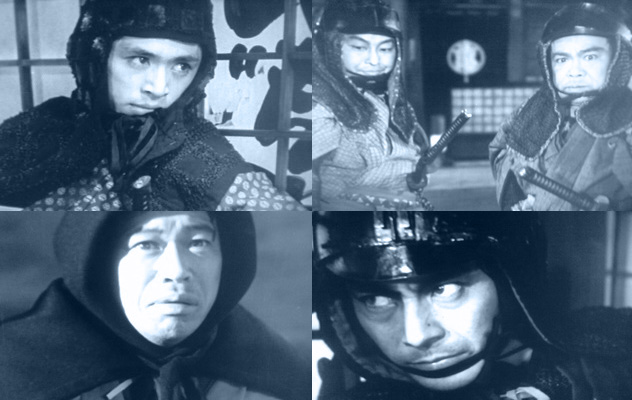 This lesser-known entry in the samurai film canon will be of great interest to Kurosawa fans. Vendetta of Samurai (Araki Mataemon: Ketto kagiya no tsuji, 1952) features four of the seven samurai from Seven Samurai (Takashi Shimura, Toshiro Mifune, Daisuke Kato and Minoru Chiaki), as well as rubber-faced old farmer Yohei (Bokuzen Hidari). Vendetta relates the true story of a meticulously planned ambush and attack upon a mounted party protecting a murderer.
Leading the revenge is Mataemon (Mifune), a sword instructor and brother-in-law to young Kazuma (Akihiko Katayama) whose brother was recently slain by fellow clansman Matagoro (Chiaki). Mataemon and Kazuma are joined by chubby old Buemon (Toranosuke Ogawa) and chubby young Rokusuke (Daisuke Kato), forming a four-man vendetta squad. (Sorry, I realize that's a lot of names to throw at you, but not nearly as many as come flying at you in the film itself!)
Anyhow, the whole gimmick of the film, and it's a good one, is to show you what such an event must have really been like, in contradistinction to the legendary battle it became over time (in which Mataemon supposedly slew some 36 men). The opening of the film portrays just such a battle, a kabuki moment of sheer fantasy in which we see Mifune, Shimura and others covered in make-up, Mifune practically doing pirouettes as he slashes attackers left and right. I couldn't believe what I was seeing; I'm well acquainted with the work of director Kazuo Mori, and such corny, stagey samurai foppery was completely incongruous with his style. Then the voiceover explained things: This is how this famous incident is traditionally portrayed, whereas the film we're about to see is the real deal, how things really happened. I appreciate what the film sets out to accomplish, and consider it largely a success. There are moments of tedium, but I understand they're deliberate, in service to the realism of an actual ambush -- there's bound to be longueurs, no getting around it.
Vendetta was a Toho production, although Kazuo Mori is better known for his work at Daiei, helming scores of films throughout the 50s and 60s including a number of Zatoichis and Nemuri Kyoshiros. Of the films of his I've seen, my favorite is probably The Tale of Zatoichi Continues (Zoku Zatoichi monogatari, 1962), starring Shintaro Katsu and Tomisaburo Wakayama.
Vendetta of Samurai is an eye-opening look at what really happens when frightened men with big swords find themselves up against it. Some find courage, others lose heart, and some will invariably lose their lives. This is one film that tells it like it is and doesn't sugar coat the stark realities.
Japanese Film Blogathon 2010
Hey everbody, head over to Wildgrounds for the 2nd annual Japanese Film Blogathon. All the hip Japanese film bloggers (including yours truly) will be weighing in on their favorite films, offering fantastic insights and insider knowledge. The event runs through November 11th, so check back early and often!
Wednesday, November 3, 2010
Double Suicide at Sonezaki
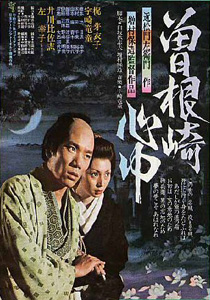 Readers of this blog know I'm a big fan of 60s auteur Yasuzo Masumura. I collect his stuff. I already had a dozen titles, and was pleased to add number 13 just recently, Double Suicide at Sonezaki (Sonezaki shinju, 1978). It's an adaptation of a play by Monzaemon Chikamatsu (1653 - 1725), the Shakespeare of Japan (however while Shakespeare only wrote 37 plays, Chikamatsu penned some 130). Chikamatsu often looked to real-life tragedies of the day for material, and this play was no doubt based, more or less, on real events.
It's a tale of star-crossed lovers: Young, noble clerk Tokubei (Ryudo Uzaki) and knockout, heart-of-gold prostitute Ohatsu (Meiko Kaji). Events conspire against our pure-hearted lovers: 1) Since Ohatsu only sleeps with Tokubei (and never charges him), her boss is fed up and plans to sell her off to some rich provincial samurai; 2) Tokubei is swindled out of a small fortune he owed his uncle/boss by the wicked Kuheiji (Isao Hashimoto); and 3) Kuheiji adds insult to injury by accusing Tokubei of attempting to swindle him and subsequently beating the shit out of him with the help of some local cops. The public humiliation, personal injury and loss of face is too much for Tokubei -- he decides to end it all. And his lady love is on board as well. It's shinju (lover's suicide) for the both of them. But what's this? Evidence of Kuheiji's heinous crimes comes to light. Kokubei is in the clear! His uncle decides to pay off Ohatsu's debt and bless their marriage. There's no longer any need for shinju. If only they can be found and stopped in time …
Sonezaki Shinju is one of Chakamatsu's most beloved sewamono (domestic drama) plays, a histrionic melodrama full of fiery furor and purple passion. Masumura has his actors play their parts in a highly exaggerated manner which I found quite entertaining. Isao Hashimoto as the evil Kuheiji is particularly vile and wonderful, all maniacal cackling and facial grimaces, like Richard III, Iago and Snidely Whiplash all rolled into one. Fans of the incomparable Meiko Kaji (Lady Snowblood, Female Prisoner #701: Scorpion) will want to see this film, as she's incandescently beautiful in it. I don't know if it's the exquisite period costumes, the hair and make-up, or simply her passionate performance -- maybe a combo, but one thing's for sure: she's utterly captivating. You just can't keep your eyes off her.
Then there's the violence. I have to say, I was a little shocked by the brutality in a number of scenes. Perhaps Masumura was trying to convey the reality of life in early 18th century Japan. Given the strict hierarchical structure of society during the Tokugawa period, I have to think this film offers an insight into how things really were for those who found themselves on the wrong side of law and/or convention. Taking some of the edge off is the fabulously incongruous score. As with many a samurai drama of the 70s, scenes of desperate men in topknots play out to the mellifluous strains of Spanish guitars or electric blues. It's not quite as bizarre as the waka-jawaka disco guitars of the Hanzo the Razor series (the second installment of which was directed by Masumura), but there's no not noticing it if you're American and were born at a certain time in the 20th century …
As with all of Masumura's films, I've got two words of advice: See it! His was an impeccable talent, his themes invariably turning to the darkness of the human heart. He did everything from corporate espionage (Black Test Car, Giants and Toys) to sex comedy (A Lustful Man) to ero-guro (Blind Beast) to war films (Red Angel) to lesbian love (Manji) to Shintaro Katsu vehicles (The Razor: The Snare, Yakuza Soldier) to, here, Chikamatsu sewamono. If any of these films sounds good to you, I'll say it again: See it!
Friday, October 29, 2010
Kadokawa Horror Collection Pt. 2
I should mention that these weren't Kadokawa pictures. Three were released through Toho and the other through Toei. Kadokawa just bought the rights once it was clear the J-horror thing was on the wane. Having seen all four now, I think it also important to note that, as J-horror goes, these films weren't in the forefront of what you'd call frightening. They'd more properly be tagged "J-atmos" or "J-pop" than anything approaching horror. However the overall quality of the productions runs from decent to outstanding, so as long as you don't come with expectations of getting the shit scared out of you, you're still likely to get something from each of them.
Inugami (2001)
 Inugami is a beautifully rendered film based on what I would guess is an unfilmable novel by Masako Bando. Therefore, there's something of the WTF to the proceedings, requiring an open mind and a willingness to just let things happen. The film was shot in lush locations of dazzling natural beauty in the mountainous regions of Shikoku, the smallest of the four major islands of Japan. Shikoku is commonly known as a rural backwater with towns full of superstitious, xenophobic hicks (a pivotal factor in the film). But that's always the way, isn't it? You get to some beautiful, remote corner of the world only to be repulsed by the locals. In this case they're the Shinto version of Puritan witch-burners and they've got their sites set on Miki (lovely Yuki Amami), a member of the mysterious and wealthy Bonomiya family who, for generations, have been associated with deadly supernatural dog spirits known as inugami (inu = dog, gami = gods). Curses, ghosts, incest, suicide, lovely scenery, there's something for everyone (even if you're not quite sure what's going on). Castwise, it's great to see Shiho Fujimura and Keiko Awaji, two veteran actresses of classic samurai cinema, appearing here in their twilight years; time hasn't done a thing but wrinkle them. Then there's Atsuro Watabe who more recently appeared as the priest dad in Love Exposure. The Verdict: Not a horror film, but not a bad escape either.
Shikoku (1999)
 Guess where this film is set? Yep, we're back on the island, but this time out the villagers aren't quite so hostile, the tone is more low-key, the focus softer (literally -- either they blew it up from 16 mm or they smeared vaseline on the lens). That said, it's far more creepy and, in my opinion, the most J-horror of the four films on offer. Three childhood friends are separated (one moves to Tokyo, one dies), only to be reunited as adults (well, the boy and girl who lived are adults -- the dead girl never made it past 16). So it's a supernatural love triangle with, once again, a Shinto-inflected back story. This is the one film of the four that I'd seen previously; I was drawn not only by the J-horror but the presence of Chiaki Kuriyama (here playing the ghost girl Sayori). There's something captivating about Kuriyama; she's not the greatest beauty -- got something of a honker to be frank. But she conveys an intriguing, cat-like essence I found striking upon first encountering her as the knife-wielding Chigusa in Battle Royale: "Come at me. Every inch of me will resist you!" Her unique blend of schoolgirl prim and feline menace work perfectly in Shikoku. Elsewhere there's the great Makoto Sato in a small role as Sendo the yamabushi (mountain priest) who's determined to close the portal through which Sayori has returned. If you don't know who Makoto Sato is, look him up in the index of Warring Clans, Flashing Blades. You've got some great performances to look forward to!
So that's it. Not much of a Halloween offering, I'm afraid. But no worries, there's always Kwaidan (1964), Jigoku (1960), Organ (1996), Pulse (2001), Illusion of Blood (1965), Ringu (1998), Ju-on: The Grudge (2002), Kuroneko (1968), Matango (1963) and, of course, Evil Dead Trap (1998).
Inugami (2001)
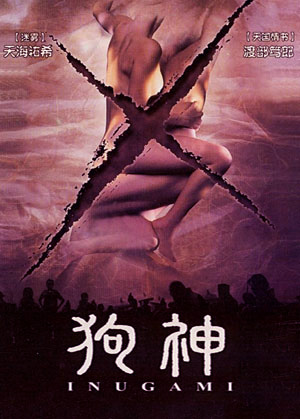 Inugami is a beautifully rendered film based on what I would guess is an unfilmable novel by Masako Bando. Therefore, there's something of the WTF to the proceedings, requiring an open mind and a willingness to just let things happen. The film was shot in lush locations of dazzling natural beauty in the mountainous regions of Shikoku, the smallest of the four major islands of Japan. Shikoku is commonly known as a rural backwater with towns full of superstitious, xenophobic hicks (a pivotal factor in the film). But that's always the way, isn't it? You get to some beautiful, remote corner of the world only to be repulsed by the locals. In this case they're the Shinto version of Puritan witch-burners and they've got their sites set on Miki (lovely Yuki Amami), a member of the mysterious and wealthy Bonomiya family who, for generations, have been associated with deadly supernatural dog spirits known as inugami (inu = dog, gami = gods). Curses, ghosts, incest, suicide, lovely scenery, there's something for everyone (even if you're not quite sure what's going on). Castwise, it's great to see Shiho Fujimura and Keiko Awaji, two veteran actresses of classic samurai cinema, appearing here in their twilight years; time hasn't done a thing but wrinkle them. Then there's Atsuro Watabe who more recently appeared as the priest dad in Love Exposure. The Verdict: Not a horror film, but not a bad escape either.
Shikoku (1999)
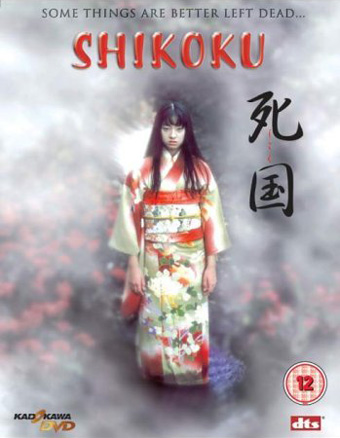 Guess where this film is set? Yep, we're back on the island, but this time out the villagers aren't quite so hostile, the tone is more low-key, the focus softer (literally -- either they blew it up from 16 mm or they smeared vaseline on the lens). That said, it's far more creepy and, in my opinion, the most J-horror of the four films on offer. Three childhood friends are separated (one moves to Tokyo, one dies), only to be reunited as adults (well, the boy and girl who lived are adults -- the dead girl never made it past 16). So it's a supernatural love triangle with, once again, a Shinto-inflected back story. This is the one film of the four that I'd seen previously; I was drawn not only by the J-horror but the presence of Chiaki Kuriyama (here playing the ghost girl Sayori). There's something captivating about Kuriyama; she's not the greatest beauty -- got something of a honker to be frank. But she conveys an intriguing, cat-like essence I found striking upon first encountering her as the knife-wielding Chigusa in Battle Royale: "Come at me. Every inch of me will resist you!" Her unique blend of schoolgirl prim and feline menace work perfectly in Shikoku. Elsewhere there's the great Makoto Sato in a small role as Sendo the yamabushi (mountain priest) who's determined to close the portal through which Sayori has returned. If you don't know who Makoto Sato is, look him up in the index of Warring Clans, Flashing Blades. You've got some great performances to look forward to!
So that's it. Not much of a Halloween offering, I'm afraid. But no worries, there's always Kwaidan (1964), Jigoku (1960), Organ (1996), Pulse (2001), Illusion of Blood (1965), Ringu (1998), Ju-on: The Grudge (2002), Kuroneko (1968), Matango (1963) and, of course, Evil Dead Trap (1998).
Wednesday, October 27, 2010
Kadokawa Horror Collection Pt. 1
Out of respect for the season, I'm working my way through the Kadokawa Horror Collection. These four films date back a decade to the glory days of J-horror when long-haired lady ghosts ruled and everything from video cassettes to PCs was haunted! As with any box set, the quality control is a little wonky, but overall I'm having a pretty good time.
Shadow of the Wraith (Ikisudama, 2001)
 A dozen years before Shadow of the Wraith, director Toshiharu Ikeda gave us the immortal Evil Dead Trap. It appears Ikeda-san mellowed considerably in the interim. Only mildly scary, Wraith plays more like a promotional video for the band Doggy Bag (whose idol brothers Koji and Yuichi Matsuo play and act in the film). There are actually two stories: 1) A spooky high school girl stalks the red-headed Japanese boy of her dreams (Koji), killing the competition with the help of her own malefic doppelganger; 2) A normal high school girl fights a powerful yet diminutive ghost in her new apartment with the help of a dreamy guy from her homeroom class (Yuichi). Only a faint aura of Argento influence remains in Ikeda's treatment of the freakier scenes (bright colors, creepy synths) compared with the more elaborately giallo-influenced set pieces of EDT. On the whole, unless you're a hardcore Japanese pop culture enthusiast with an interest in idols, you'll probably want to skip this one.
Isola (2000)
 Hey, what if you had multiple personalities and one of them turned out to be the malevolent disembodied spirit of a woman scientist who died in an isolation tank and is now killing everyone around you? Dig the conceit? Then you'll enjoy Isola. Set in Kobe during the aftermath of the Great Hanshin earthquake, everything's all rubbly and the aura of crisis hangs heavily in the air. A pretty yet troubled young psychic arrives on the scene and soon bonds with a high school girl afflicted with the above-mentioned personality disorders. Can they stop the evil spirit before she kills again? I enjoyed this film, and found it slightly weirder than the average J-horror. The beautiful girl with the 13 personalities turns out to be Yu Kurosawa, teen idol and granddaughter of Akira Kurosawa. Shortly after making this film, she married and retired from the business. Too bad, she had a truly hypnotic allure. Also present in a small role as a suicidal old man, is Hideo Murota -- he's been in everything from Zero Woman: Red Handcuffs to Merry Christmas Mr. Lawrence.
OK, on to the other two ...
Shadow of the Wraith (Ikisudama, 2001)
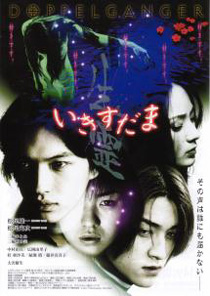 A dozen years before Shadow of the Wraith, director Toshiharu Ikeda gave us the immortal Evil Dead Trap. It appears Ikeda-san mellowed considerably in the interim. Only mildly scary, Wraith plays more like a promotional video for the band Doggy Bag (whose idol brothers Koji and Yuichi Matsuo play and act in the film). There are actually two stories: 1) A spooky high school girl stalks the red-headed Japanese boy of her dreams (Koji), killing the competition with the help of her own malefic doppelganger; 2) A normal high school girl fights a powerful yet diminutive ghost in her new apartment with the help of a dreamy guy from her homeroom class (Yuichi). Only a faint aura of Argento influence remains in Ikeda's treatment of the freakier scenes (bright colors, creepy synths) compared with the more elaborately giallo-influenced set pieces of EDT. On the whole, unless you're a hardcore Japanese pop culture enthusiast with an interest in idols, you'll probably want to skip this one.
Isola (2000)
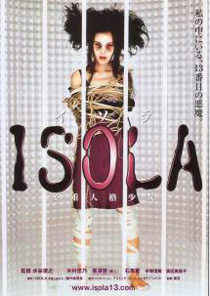 Hey, what if you had multiple personalities and one of them turned out to be the malevolent disembodied spirit of a woman scientist who died in an isolation tank and is now killing everyone around you? Dig the conceit? Then you'll enjoy Isola. Set in Kobe during the aftermath of the Great Hanshin earthquake, everything's all rubbly and the aura of crisis hangs heavily in the air. A pretty yet troubled young psychic arrives on the scene and soon bonds with a high school girl afflicted with the above-mentioned personality disorders. Can they stop the evil spirit before she kills again? I enjoyed this film, and found it slightly weirder than the average J-horror. The beautiful girl with the 13 personalities turns out to be Yu Kurosawa, teen idol and granddaughter of Akira Kurosawa. Shortly after making this film, she married and retired from the business. Too bad, she had a truly hypnotic allure. Also present in a small role as a suicidal old man, is Hideo Murota -- he's been in everything from Zero Woman: Red Handcuffs to Merry Christmas Mr. Lawrence.
OK, on to the other two ...
Tuesday, October 26, 2010
Snow Trail
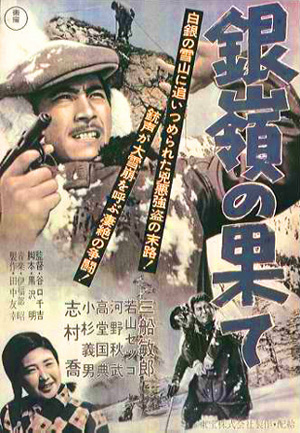 Snow Trail (1947) is a milestone film for students of Japanese cinema, chiefly as it marks the screen debut of one Toshiro Mifune. Scripted by Akira Kurosawa and directed by his childhood friend and lesser-talented fellow Toho director Senkichi Taniguchi, it is not an outstanding film, but as you've no doubt gathered by now, there are some outstanding things in it.
Most remarkable by far is the performance of Takashi Shimura. Of course a remarkable performance from this legendary actor isn't remarkable in itself, as he gave so many: an embarrassment of riches. Here, he's a bank robber on the lamb with his younger and far less nice partner in crime (Mifune). They're stalking about in the Japanese alps. Why they decided to head there is never explained, but it makes for many a beautiful scenic vista (and much trudge-based plot padding). The two men (there was a third but he fell down a ravine) find themselves in a remote lodge with a kindly old man, his charming granddaughter, and a cheerful local mountain climber. They're all snowed in and there's nothing for it but to sit and wait. Shimura's heart begins to thaw in this compassionate company; Mifune's hardens. While the older crook sips sake and moons paternally over the girl, his angry young cohort spends his time cleaning his gun and counting his loot. Tensions mount. Something's gotta give ...
As I say, the film belongs to Shimura. The Spencer Tracy of Japanese film, he could say it all with a mere gesture. A more natural actor you'll never find, nor a more versatile one. From the battle-hardened Sengoku warrior of Seven Samurai to the cancer-riddled bureaucrat in Ikiru and all points in between, Shimura's every turn was perfection. In Snow Trail, he undergoes a transformation of character upon which hangs the rest of the picture. Everything else is fairly cookie-cutter, including Mifune's rather two-dimensional heavy. However, even in this comparatively unrewarding role, we see a Mifune already nearly fully-formed. His pent-up tension, his flashes of rage, his body language; he's a natural. Watching his performance, it's possible to grok with a then-37-year-old Akira Kurosawa and his determination to get this hot new talent on a set of his own (which he promptly did with the following year's Drunken Angel).
And the rest, as they say, (as they say) is history.
Thursday, October 21, 2010
Shinsengumi Chronicles
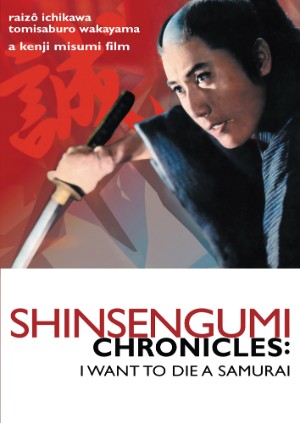 Once again, Animeigo and I are on the same page. In this case, it's page 194 of Warring Clans, Flashing Blades where I noted that Shinsengumi Chronicles is "largely accurate and impressive in its scope and devotion to a thorough retelling of the events of the day." Those unfamiliar with the Shinsengumi, a ronin militia formed during the downfall of the Tokugawa shogunate, should probably read the whole review, as I spend a bit of time discussing the background and forming of this most legendary aggregation of lethal swordsmen. But even it you don't, Animeigo has done their usual whiz-bang job of providing lots of supplemental material to bring you up to speed.
One thing puzzles me, though. My name is on the back of the DVD case, after the quote "Samurai Knights of the Roundtable … " -- something I've never said or written in connection with this film. Either Animeigo's marketing department is confused, or they're just making stuff up. I understand they're under considerable stress just now, suffering from both a bad economy and consumer flight from disc-based media. But really, fellas, "Samurai Knights of the Roundtable"? Give me some credit. That's not only corny, but wholly inaccurate. These Shinsengumi guys operated more like gangsters than mythical Arthurian knights of old, something you surely know, so why wouldn't I?
But never mind this lapse, Shinsengumi Chronicles is a great samurai film, one of the best and highly recommended.
Friday, October 15, 2010
Inch by Incheon
 Just about halfway through a 9-hour layover at Incheon. As airports go, you could do worse; there are big, comfy cushions to stretch out on, plenty of restaurants, tons of free wi-fi, major shopping (if that's your thing). They're nuts for shopping in this country. All the cineplexes where the PIFF films were showing were inside shopping centers. One was in the Largest Department Store in the World (for real -- they have a huge Guinness World Records seal out front). One night after a screening, the elevators went on the fritz and we all had to use the escalators. Going down through floor after floor after floor of Prada and Gucci and Lancome and Chanel and the like -- I guess it's paradise for some folks, but I felt like I was descending through some realm of consumer madness.
Oh hey, there goes the royal family. It's a ren-faire-like procession of actors in Joseon period costume portraying the royals of yore. They walk solemnly up and down the third floor passenger terminal. Don't quite know why, but it's kinda cool.
OK, I've bored you enough with this non-film entry. Go enjoy your day (or evening). I've got thousands of miles before I sleep ...
Thursday, October 14, 2010
Secret Reunion
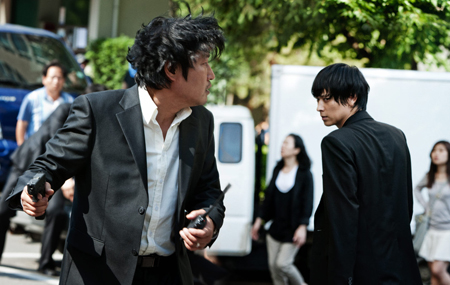 How great is Secret Reunion? Let me count the ways. It's a multi-layered, breathlessly-paced North/South Korean spy film; a buddy picture full of humor and action; a pitch-perfect political metaphor; and just possibly the best film I've seen all year.
Of course I'm a sucker for Song Kang-ho and, once again, he pulls the whole film together with his unique blend of schlubby, sleazy comedy and emotional intensity. He's a cornerstone of contemporary South Korean cinema for a reason; you just feel like you know the guy from the first frame and you're on his side, come what may. Major props also to newcomer director Jang Hun. A former AD to Kim Ki-duk, Secret Reunion is his sophomore effort after turning heads with his gangsters vs. actors debut Rough Cut (2008).
 Song plays Lee Han-kyu, a National Intelligence Service agent fired for botching a mission to capture North Korean operative Song Ji-won (Kang Dong-won). Six years later, the two men meet, albeit under completely different circumstances, each becoming increasingly more involved in the other's life. Lee knows Song's real identity but keeps it on the down-low for his own purposes. Song does likewise. As events advance and tension mounts, the two men develop a mutual admiration and respect for one another. Can the North Korean and the South Korean work things out? Can't we all just get along?
Kang Dong-won deserves praise as well, perfectly complimenting Song Kang-ho's performance with his own stoic, steely stance. It's funny, I was just looking at him on Korean television the night before in a very different role, that of the title character in Jeon Woochi: The Taoist Wizard, wherein he fights giant rat and rabbit spirits among other things. Yeah, you'll be hearing more about that one -- watch this space …
In any case, I found Secret Reunion so thoroughly enjoyable that I even forgot how loud it was. I don't know if it's Korean cinemas in general or just the films at the PIFF, but every screening I've attended has been just short of deafening. The sound on these films is cranked up to 11, way louder than anything in a cineplex in the States. So if you like your action loud, get your ass to Busan!
Wednesday, October 13, 2010
Busan Day 3
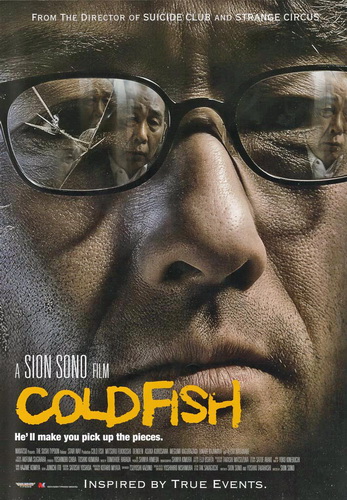 Unfortunately, due to a combination of poor timing, illness and first-timer ineptitude, I'm not seeing a whole lot of films here in Busan. I really need to get back here next year so I can utilize the knowledge I'm gaining from all the mistakes I'm making.
I did get to see a wonderful Korean comedy from 1961, Under the Sky of Seoul, and last night I caught Sion Sono's latest, Cold Fish. The latter is a perverse, serial killer splatfest that could only come from the unbridled imagination of the man who gave us Suicide Club and Love Exposure. I won't say any more about it, as it's one of those films best seen knowing as little as possible -- just let it slice into you and scatter you in pieces all across the theater floor.
Elsewhere, I wandered down the beach to where they shot all the outdoor restaurant scenes for Tidal Wave. That was a mind fuck, like stepping into the movie (minus the tsunami and Park Joong-hoon). Then, when I went back to the hotel room, what came on the TV? Yep, you guessed it. I was inside the movie watching the movie inside my hotel -- what would Poe say? (Clue: It's tattooed on this chick's back).
OK, gotta run. Going to see the new Song Kang-ho spy picture Secret Reunion. Love that guy.
Monday, October 11, 2010
Pat in Pusan (well Busan really)
 After an ungodly 18-hour journey, I'm finally in my hotel room in Busan, South Korea. Why am I up, writing this? Not only is it after midnight here, but, according to my clock, I've been up all night and am shuffling around in the dewy dawn like some overripe meth head. Only traveling in Asia can leave you so skuzzily in need of a shower and yet so damned exhilarated (meth don't even come close). Now all I need to do is get enough sleep to function for the PIFF.
More to come ...
Saturday, October 9, 2010
Special NYC Screening
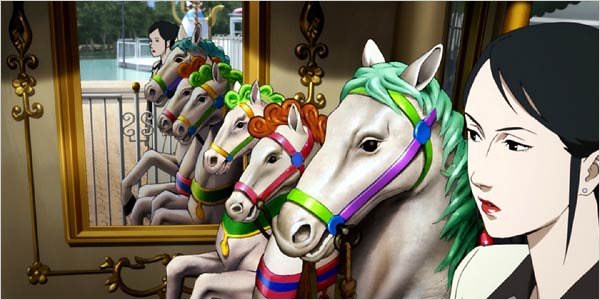 Gotham Screen International Film Festival 2010 in NYC will be holding a special tribute screening for the late anime master Satoshi Kon. His last feature film, Paprika, will be screened in 35mm in Tribeca Cinemas on Oct 13. I caught the premier back in 2007 and wrote a review.
If you haven't seen this amazing film, you should now. Its a special film made by a special human being. Who can read his last words and not be moved?
Monday, October 4, 2010
Tidal Wave
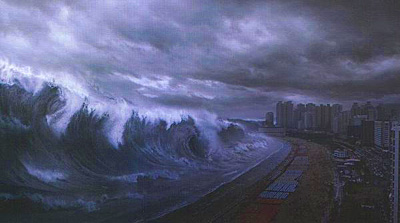 In light of my impending trip to South Korea for the 15th Pusan International Film Festival, I thought I'd watch the beach front location of the event being violently demolished by a massive tsunami. For a giggle. To this purpose, Tidal Wave (2009) delivered the goods. The other 90% of the film however ... not so good.
In the classic disaster flick formula, we're introduced to a variety of characters with whom we are expected to bond through long intervals of character development. This serves two purposes: 1) It sets up a payoff when the shit hits the fan -- we're emotionally invested in the fates of our new friends; 2) It creates padding (let's face it, you can't have 120 minutes of giant waves crushing stuff). So you've got the brave young coast guard guy, the plucky single mom, the lovable loser guy, the brainy-yet-hot chick, the scientist who knows the tidal wave is coming (but no one will listen), the adorable child, etc., etc. These individuals all display an emotional range that goes from goofy to sappy and back again. And again. And again. Yep, that's pretty much all you get here, either goofy or sappy. The laughs are played broad, usually involving slapstick and/or some measure of extreme drunkenness. And despite how tough or smart a character might be, underneath they're all histrionically sentimental. Behold, as the waves finally hit, the weeping, the wailing, the gnashing of teeth! The film's special effects are matched only by the emotional spectacle the actors make of themselves.
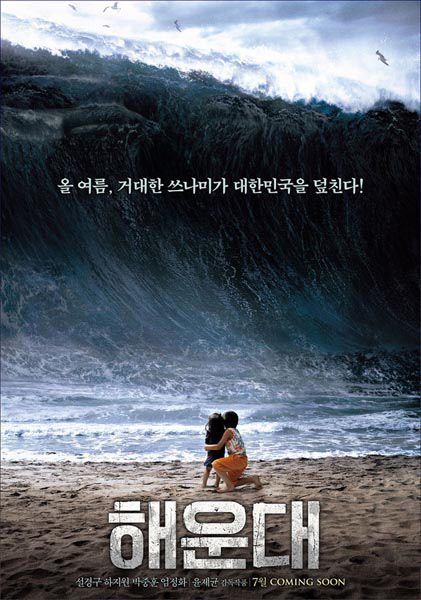 There's also an issue with the ending, which it's impossible for me to spoil unless I go into detail (which I won't). The thing is, in a film like this, where you've already kept the audience waiting for the vast majority of the picture, when the grand finale comes, the one thing it shouldn't do is drag. Oh how it drags. It drags like a drag queen taking a drag on the back of a dead dragon. It's a drag.
That's not to say there aren't some thrilling moments, like right when the wave hits. Obviously these scenes will resonate more with the tens of thousands of Koreans who flock to the lovely Haeundae Beach area each summer (the Korean title of the film is Haeundae). Me, I've been looking at pictures of the place in tour books and online in anticipation of my visit, so it was a little spooky seeing it wiped out by a cyclopean wall of water. Those without fond memories or a vested interest in Haeundae Beach may not be so engaged. However, if you're a disaster film fan, you'll probably want to see Tidal Wave, if only for the FX and the novelty of a modern Korean take on an old genre. If so, good night and good luck.
Friday, September 24, 2010
Tokugawa Sex Ban: Lustful Lord
 Sometimes, in anticipation of a film, it's possible to over-hype it to yourself, play it up in your mind until, when you finally see it, you're disappointed that it didn't live up to your overheated expectations. Such was the danger with Tokugawa Sex Ban: Lustful Lord (1972), a film I've wanted to see for nearly a decade. I needn't have worried, though; this is one of those films that defies expectations.
Made by ace Toei director Norifumi Suzuki, it is the story of a sexually inexperienced daimyo (Hiroshi Nawa) who, in 1825, finds himself compelled to marry one of the shogun's many daughters and, oh no, consummate the marriage. Displeasing the shogun is not an option, and the lord's ministers are determined that their boss delivers the goods. They get the lascivious Hakataya (Fumio Watanabe), a samurai well versed in the ways of the flesh, to turn him out. After a three-day intensive with a bevy of multi-racial beauties (including sizzling French import Sandra Julien) and a whole lot of hot sex, our daimyo is transformed into the eponymous horny lord. He becomes sex mad, and, resentful of the rest of his subjects who've been having it off all along, he prohibits everyone else from engaging in his newfound pleasure. Every man must have his member stamped with an official seal; if it's found to have rubbed off, the whole thing must come off. Yikes! Meanwhile, the lord keeps on bonking.
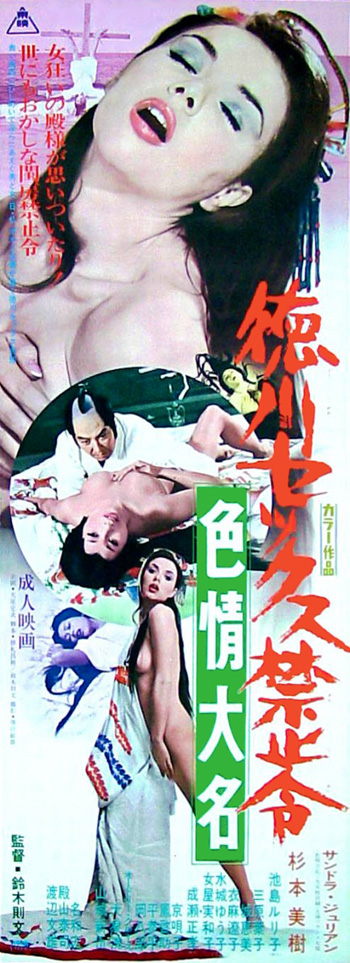 It's truly remarkable how explicit a film like this can get without ever showing penetration or even genitalia. Suzuki was a master of this type of film, and Tokugawa Sex Ban: Lustful Lord ranks right up there with his nunsploitation classic Convent of the Sacred Beast (see my review of the latter in Asia Shock). Sex and violence are so perfectly intermingled you'll likely become alarmed at how much you're enjoying it. Suzuki's supreme ability lies in seducing the eye before the mind can interfere, allowing the audience to gaze upon rape, torture, giant dildoes and various atrocities and appreciate their artistic merits. I realize how perverse this sounds, but bear in mind the era, the unique flair for S&M that runs through Japanese art and culture and the fact this this is, after all, an exploitation film and not to be taken too seriously. Plus, as I say, Suzuki is an artist and master of the OTT moment; even as people are being beheaded, crucified and castrated, it all works to serve the story rather than being there for mere sensation.
And the whole affair is frequently played for laughs. When you're not getting aroused, you're laughing your head off, a heady mixture of enjoyments. Frankly, words fail to describe this picture. You really just need to see it, and thanks to the good folks over at kurotokagi.com, now you can. My advice is to click that link and get yourself a copy of this amazing movie.
Wednesday, September 22, 2010
The Sword With No Name
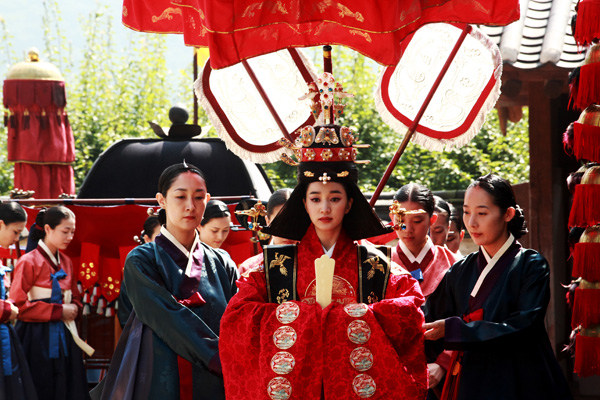 Oh pity the terrible fate of Korea's poor Queen Min, destined to die on the end of a Japanese sword in 1895. I was just reading about this incident, the result of palace intrigue and treacherous conspiracy, so this film, an historical drama based on the life of Queen Min, was of immediate interest.
The Sword With No Name (2009) is based on a novel, and, as is the wont of novelists, there is a fictitious character placed at the nexus of things. In the film adaptation, he is Moo-myeong (Jo Seung-woo), a country bumpkin with mad sword skills. Frankly, the character is sketchy at best; we first encounter him snoozing in a boat, waking to gaze, love-at-first-sightedly, at the young, soon to be queen (Soo Ae). Later we're supposed to get that he's really an ace assassin. He gets the gig to murder the beautiful young woman (but of course he's way too in love to do the deed).
Frankly, the film is downright choppy in parts; pivotal scenes are almost elliptical in their execution, leaving the audience struggling to make sense of it all. I got the impression that there was a lot of assumed knowledge on the part of the audience. After all, the story of Queen Min would be a familiar one for most Korean moviegoers. However, Korean film these days is usually geared for an international audience, so such cultural/narrative insularity is surprising. Or maybe director Kim Yong-gyun just isn't much cop at this sort of thing … ?
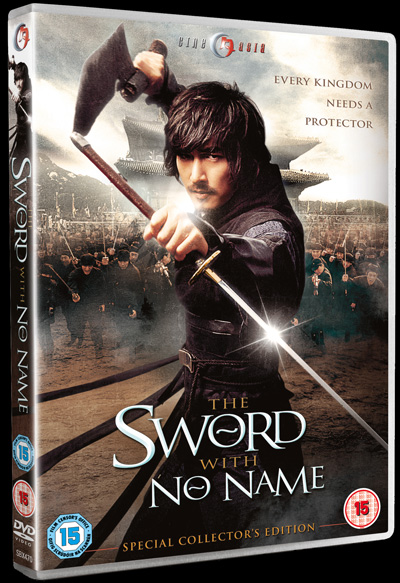 Moo-myeong devotes his life to protecting his beloved queen, becoming a castle guard to be closer to her. Obviously, things don't end well. It's a doomed lovers tale made all the more poignant when you know what's in store for Queen Min. Along the way there's plenty of sword action and the performances are terrific. Jo Seung-woo overcomes the vagueness of his character with sheer force of will, fleshing him out and making him someone you can get behind. Soo-ae says more with a teardrop than most actresses and Cheon Ho-jin is great as her father-in-law and arch enemy, the scheming Daewongun.
Overall, I'd recommend The Sword With No Name. It's drawbacks are occasionally annoying, but ultimately there's far more good stuff here than bad, plus thrilling fight sequences, tender love scenes, melodrama, conspiracy, turn-of-the-century culture mash-ups (the queen trying on a corset, interacting with Europeans, etc.) and some excellent beheadings. To enhance your experience, I'd advise a bit of brush up on the period. Do a search on Queen Min or Empress Myeongseong (as she was also called), or, even better, read this book. As in all things in life, a little prep goes a long way.
Friday, September 17, 2010
Connected
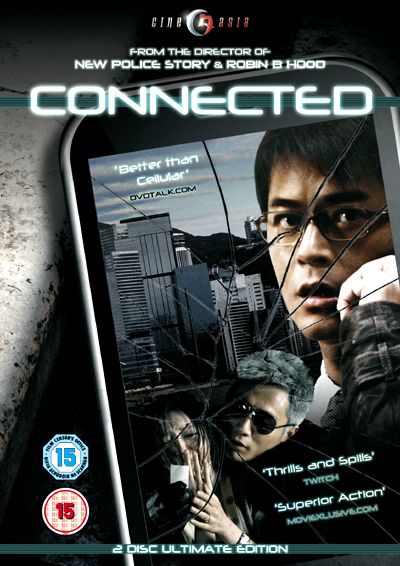 I've never seen Cellular (2004), the Hollywood thriller upon which Connected is based (hey, an Asian remake of a Hollywood picture -- there's a switch!) although I've heard it wasn't good. This 2008 Hong Kong version, however, is nothing short of superb. Director Benny Chan show's us how it's done, bringing his own brand of hyperkinetic action as well as a healthy dose of sustained, edge-of-your-seat suspense.
Louis Koo (Accident, Triangle) plays the Hitchcockian everyman who receives a call on his cell phone from a woman (Barbie Hsu) who's been kidnapped. He tries to hand the phone off to a former badass detective/now traffic cop (Nick Cheung, whom we last saw in The Beast Stalker), but the disgruntled officer thinks it's a prank. Of course he'll realize later that it wasn't and get involved in the case, much to the chagrin of his former underling/now boss (Eddie Cheung). Many jaw-dropping chase scenes ensue.
The pace is relentless and the tension taut throughout. Barbie Hsu's histrionics become occasionally tiresome, but what's the poor woman to do? Her loved ones are being threatened and brutalized by bad guy rogue Interpol dudes after … well, you gradually find out what they're after and why. But it doesn't really matter. What matters is wild action, OTT stunts and high tech hijinks all delivered with style and a sense of humor. Are we reinventing the wheel here? No. Is this an important film that will change the way you look at life? Probably not. Is it a top-notch cinematic thrill ride from one of the best action directors in the business? Oh yeah.
Wednesday, September 8, 2010
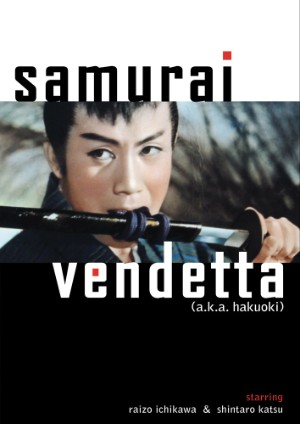
Samurai Vendetta
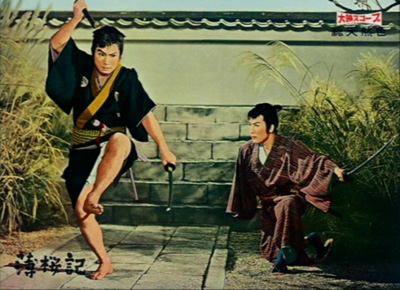 Raizo! Katsu-shin! Chushingura! Tange Sazen (sort of)! If you don't know what I'm talking about, you probably won't enjoy Samurai Vendetta (1959) as much as those who do. But that's how it goes with some samurai films: The filmmakers assume a certain amount of background knowledge on your part because, after all, you're Japanese, right? Why else would you be watching it? Surely no gaijin would be interested in this stuff. It was to remedy this cultural myopia that I originally wrote Stray Dogs & Lone Wolves and then, a few years later, Warring Clans, Flashing Blades (which includes, funnily enough, a review of Samurai Vendetta). You're welcome.
And you're doubly blessed, as the good folks at AnimEigo have seen fit to release Samurai Vendetta featuring their unique brand of onscreen annotation and cultural/historical supplemental materials. Armed with an AnimEigo edition of a samurai film and my books, you're gonna be just fine.
So what's it all about? Essentially it's a love triangle between real-life samurai Horibe Yasubei (Shintaro Katsu), made-up samurai Tange Tenzin (Raizo Ichikawa) and mutual love interest Chiharu (Maki Chitose). I should point out that while I normally write Japanese names Western-style, here I've retained the Japanese form of surname first for the two male characters in order to point out the similarity between the name Tange Tenzin and Tange Sazen (the latter being the famous one-armed, one-eyed ronin character originally created by novelist Fubo Hayashi in the 1920s). Why point this out? Because Tange Tenzin is similarly mutilated over the course of the film, making me wonder what the author of the original story, Kosuke Gomi, was playing at. A one-armed swordsman named Tange? Dude, it's been done.
 Historical events such as Horibe's thrilling duel with the Murakami brothers at Takadanobaba in 1694 and the revenge of the Loyal 47 Ronin in 1702 provide a backdrop for the two men's mutual longing for Chiharu (as well as their own bromance -- being samurai, of course, they barely speak a dozen words to one another throughout the movie). Along the way, many cruel and treacherous acts are perpetrated against Tange and Chiharu. Horibe's big wound is he doesn't get the girl (that's not a spoiler -- you learn this fairly early on).
On the minus side, Raizo's swordplay, never the strongest, comes off much worse next to that of Shintaro Katsu (aka Zatoichi), particularly when Raizo's forced to play it left hand. And then there's the regrettable casting of Maki Chitose. I don't know whose cousin or niece or sister-in-law she was but frankly she's a drip, and definitely not up to the more dramatic moments of the script. So uninspiring is her performance, one wonders why the two samurai would fall so utterly for such a homely, insipid woman. Where's Masayo Banri when we need her?!
Overall, though, Samurai Vendetta is a decent film. Somewhat more melodramatic than what you're used to getting with Katsu and Raizo -- Sleepy Eyes of Death this ain't. But there's no denying this is one picture that's positively steeped in bushido, adhering to the code of the samurai to the bitter end. The original Japanese title, Hakuoki, translates as Chronicle of Pale Cherry Blossoms, a more fitting title I think. While there are plenty of vendettas to go around, the film is ultimately more concerned with the beautiful melancholy symbolized by those falling petals, that of untimely death.
Friday, September 3, 2010
Mother
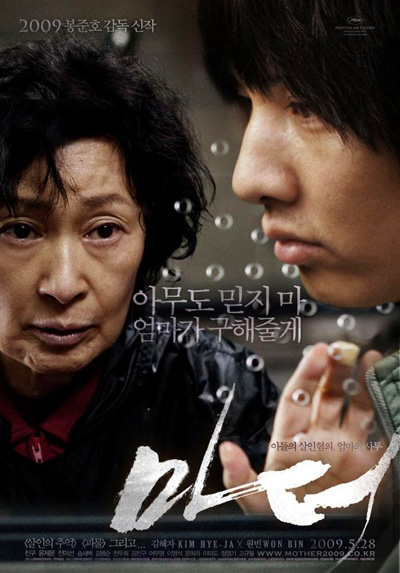 Man, that's what I'm talking about. Excellent film. I love murder mysteries and I love Korean film, so this one was made to order, but Mother (2009) is a downright fantastic film into the bargain. Director Bong Joon-ho revisits the bleak, rural noir setting he conjured so deftly in Memories of Murder (2003). But whereas that film was based on South Korea's first (and still unsolved) serial killer case, this film presents the full mystery set including the denouement, providing an overall more satisfying film experience.
On paper it's, well, paper thin: Mother (Kim Hye-ja) tries to save her simpleton son (Won Bin) who's been sent up for a murder he's clearly too sweetly retarded to have committed. It's a small town with seemingly no potential perps except maybe her son's sleazy friend (Jin Goo). Where do you go from there? This is clearly no Agatha Christie affair featuring an assortment of colorful characters with means and motives. However, as mom investigates, she starts uncovering the town's nasty little secrets in a Blue Velvet-y, pick-up-a-rock-and-see-what's-squriming-there kind of way. Her gentle, gradual flaying of the community reveals all sorts of unexpected things, including issues pertaining to her own past. It's all very sordid and dark and utterly engrossing. By the time the credits role, two hours have slipped right by -- you've been utterly rapt.
It's difficult to say much more for fear of spoiling something. Best to just sit down and let the film envelop you like a dark dream. Bong Joon-ho got a lot of attention for his 2006 monster mash The Host, but for my money it's the crime stuff at which he truly excels. Mother is a modern murder masterpiece not to be missed.
Friday, August 27, 2010
Crying Fist
 Korean fight picture. So you know it's gonna be brutal. Not that the Korean people are indigenously any more brutal than anyone else. However, between the Japanese, Americans, Russians and their own various home-grown military dictatorships, these people were brutalized for the better part of the twentieth century, and that kind of thing doesn't just go away. Fortunately South Korean filmmakers have been sublimating this brutality into their work over the last decade or so, creating something like a national catharsis. Don't get me wrong, they also crank out their share of sicky-sweet, sentimental fare. The cumulative result is a national cinema that offers a broader emotional range than its neighbors to the north and south.
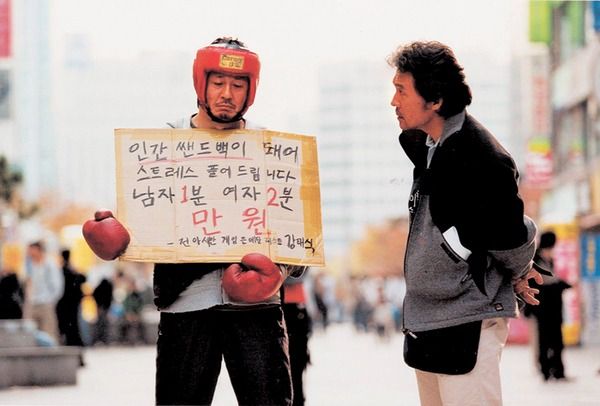
So yeah, Crying Fist (2004). I didn't get a chance to see it when I was writing Asia Shock, so it's not included in my profile of the great Choi Min-sik, one of the picture's two stars (the other being Ryoo Seung-beom). No one who's seen Oldboy (2003) is likely to ever forget Choi Min-sik, Korea's own Lawrence Olivier/Robert DeNiro/Gerard Depardieu. If you check the years, you'll shrewdly deduce that Choi was still down at his fighting weight from the Oldboy shoot when he made this film (he's been much pudgier on other outings). That said, he's still 42, not a good age to be staging a boxing comeback as his character, Kang Tae-shik, plans to do in the film, particularly when he's been making his living on the street as a human punching bag. Literally. For 10,000 won (roughly $8.50) you can wail away (he supplies the boxing gloves). Yep, he's pretty down and out, and this daily abuse isn't helping his head -- he's starting to show signs of brain damage.
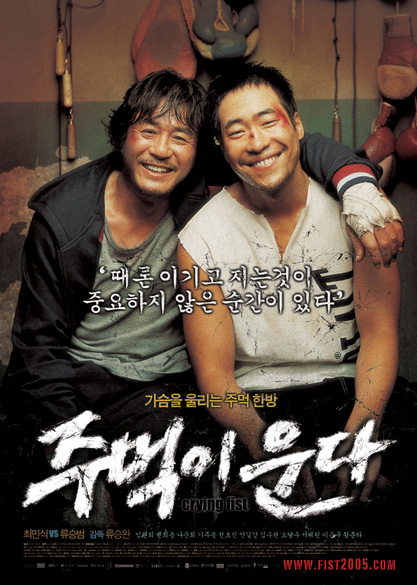 Then there's the parallel story of Yoo Sang-hwan (Ryoo Seung-beom). He's a petty criminal with natty dreads and a beard who finds himself in the slammer (minus the hair) after a mugging goes horribly awry. The prison population soon learns that he's nobody's bitch after he chews off a guy's ear Tyson-style on his first day. He's immediately recruited into the boxing team where perhaps his natural talent for violence can be honed and refined -- see where this is going? Of course Yoo and Kang are on a collision course, but just how they meet I'll leave for you to discover.
While I'm not particularly drawn to the genre, I thought this was a great boxing film. Gritty, bloody, populated with a fascinating array of urban losers and grimy locations -- you can almost smell the garbage and B.O. The supporting cast is great, featuring Oh Dai-soo (A Bloody Aria), Nah Moon-hee (The Quiet Family) and the diminutive character actor Ki Joo-bong (he's been in everything -- one of those "oh yeah, that guy" guys).
Style-wise, Crying Fist changes up on you -- it gradually shifts from elliptical jump-cut indy at the beginning to a more conventional ending, but it all works out. I have one minor complaint, but it concerns the ending, so I'll have to sit on it. I'll wait 'til you see it and then I'll tell you ...
Tuesday, August 24, 2010
Invisible Target
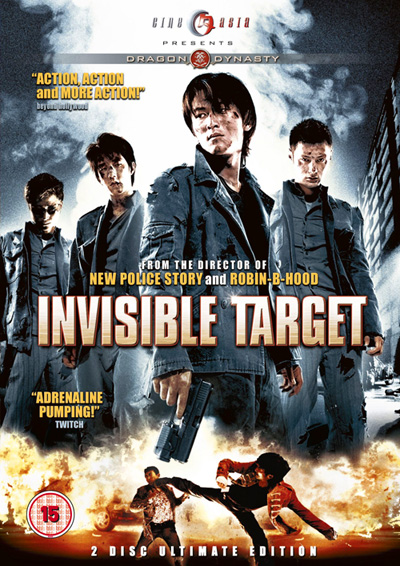 Man, what a kickass flick! I realize that isn't a terribly scholarly pronouncement, but this ain't that kind of film. This is balls out action, everything's on the table: Urban crime thrills, martial arts, parkour, shit blowing up, gang fights, a seemingly unlimited supply of plate glass to fling people through, and of course guns, lots of guns. Shame about the crap title (how can a target be invisible? And what does that have to do with the price of rice?).
Boiled down to its essence, it's a cops and robbers picture. An elite criminal gang blows up an armored van, inadvertently killing the fiance of police detective Chan Chun (Nicholas Tse). Six months later, the tragedy has turned him into something of a rogue I-just-don't-care-anymore cop. When he isn't moping around the apartment, he's blowing a stake-out by chasing after the perp through the streets of Hong Kong in a dizzying free-running sequence. Then there's Carson Fong (Shawn Yue). He's another detective, more of a slick dick, but just as explosive and high-kicking. Rounding out the inevitable trio is straight-laced rookie Wai King Ho (Jaycee "Son of Jackie" Chan). On the other end of the equation is that group of baddies I mentioned earlier, led by Tien Yeng Seng (Jacky Wu, one of the toughest movie mofos I've seen in quite some time).
This film had me involuntarily laughing and whooping, delighted as an eight-year-old completely lost in the fun. If you've got a drop of testosterone in you, you'll likely do the same. Invisible Target (2007) is the perfect synthesis of Hollywood and Hong Kong action, with a little Parisian flair thrown in. The fight sequences are breathtaking -- fast and tight, they raise the bar considerably on what you usually get in this kind of film, even employing a touch of wire fu. Like I say, everything's on the table and director Benny Chan is on his game.
"That's all very well and good, Pat," I hear you saying, "but what's so shocking?" Well frankly, considering the bad title and generic box art, I wasn't expecting much. What's shocking is how damn good it is! Jackie Chan's kid acquits himself admirably; Nicholas Tse shows what a shape-shifter of an actor he is (in comparison to the character he played in The Beast Stalker); Shawn Yue and Jacky Wu are just plain awesome. While I'm not big on the historical epics coming out of Hong Kong of late, these crime flicks are just getting better and better. Of course I miss the more quirky, crazy, fried vibe of HK films of the 80s and 90s. Luckily there's a ton of those on disk when I need them; this new stuff, while more streamlined and Hollywood-influenced, well, I'm still liking what I'm seeing. Keep 'em coming, Benny Chan!
Friday, August 20, 2010
Nagisa Oshima Pt. 2
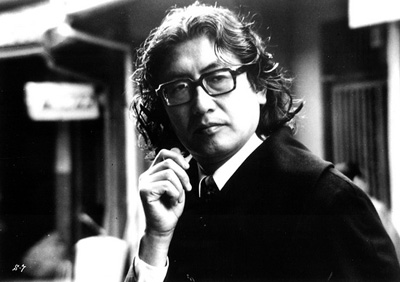 Warning: DVD manufacturers often use the box set as a way to get you to buy sucky movies. Case in point: Criterion's Eclipse label box set Oshima's Outlaw Sixties. Of the five films on offer here, only one (or maybe two) really warrants a look in. So let me save you a little money by reviewing the rest of them (for more see Nagisa Oshima Pt. 1) as well as one more that Criterion really ought to release.
Three Resurrected Drunkards (1968)
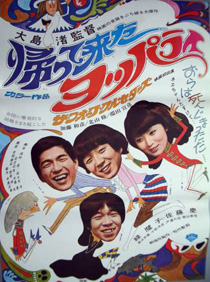 This kooky bit of piffle comes as close to a typical Sixties romp as Oshima is likely to get. The misleadingly-titled film stars real life pop group The Folk Crusaders as three decidedly sober students who fall victim to a couple of South Korean soldiers. The latter have deserted, not wanting to fight in Viet Nam, and have entered Japan illegally. They steal the clothes of two of the students and assume their identities. So far, so good. But then things get sillier and sillier until, about halfway through, the whole movie starts all over again; after about ten minutes of the exact same opening sequence, things finally get going in a slightly different direction. This film further fed my suspicion that Oshima was interested in not only provoking his audience, but actually alienating if not downright annoying them. This extends to showing the three young guys ridiculing the famous Eddie Adams photo of the summary execution of a Vietcong soldier. Redeeming features: Kei Sato (as one of the deserters) and Fumio Watanabe doing an OTT dastardly character (it's fun to watch him playing it for laughs for once). But really, this film was a waste of my time.
Japanese Summer: Double Suicide (1967)
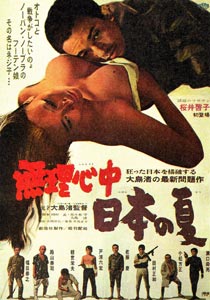 Another study in driving the audience up the wall. A buxom young lass (Keiko Sakurai) wanders around looking for a man, any man, to have sex with. A gaunt, haunted-looking man (Kei Sato) wants someone to kill him. Elsewhere, a young guy longs to shoot a gun, a rotund monster of a man likes to stab people, an old man spends a long time repairing a gun, a group of heavily armed men prepare for a gun battle, most of the main characters are held against their will, and for the first hour nothing happens. The girl seduces several men to no avail; Kei Sato jumps in front of every brandished weapon -- nobody will kill him; the gang war never comes off. It's all talking and no action. Once again, Oshima is, well there's no other term for it: He's fucking with us. Finally things kick off, and the remaining forty minutes are an explosion of general mayhem, the various main characters befriending a young, caucasian psycho sniper character similar to the one in Peter Bogdanovich's Targets (although Bogdanovich's film came out a year later -- go figure) for a grand finale shoot out with the cops. To its credit, the film's B&W photography and avant garde production design are visually stunning and the performances are great. So if you're up for an hour of stultifying, Waiting for Godot-style existential nothingness followed by a lot of shooting and killing, this is your movie.
The Ceremony (1971)
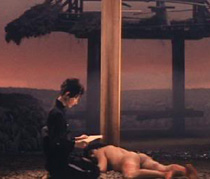 This was the other film, along with Boy (1969), recommended to me as among Oshima's best. I'd have to agree, but it's far more uneven than Boy and, in Audie Bock's phrase, "discouragingly complex." The story concerns the Sakuradas, a wealthy, provincial family that, over the course of roughly 25 years (from the immediate post-war period to the "present") completely disintegrates. Narratively, we're dropped into the story with no explanations, and forced to catch up as best we can through flashbacks. "The Ceremony" isn't any one in particular, but rather a collective reference to the series of weddings and funerals we follow throughout the film; these events, and the increasingly outrageous behavior of their participants, serve as way stations on the family's ever-spiraling downward trajectory. What kind of outrageous behavior, you ask? Let's see, there are incestuous dalliances, corpse bothering, a wedding with no bride (during which a coup attempt occurs), someone is affixed to a tree with a samurai sword, a young man sexually assaults his grandfather -- is that outrageous enough for you? Bear in mind, however, that these scenes come at the price of interstitial longueurs. Yes, pacing is a problem here; overlong voice-overs, tedious conversations, vague, dark scenes where nothing much happens. The question I asked myself as a critic was, "Does it all even out? Are the interesting bits worth the slog?" I suppose so. I can't really say no. It's just a shame no one thought to cut 120 minutes down to 100; it would have improved the picture immeasurably. Those interested in post-war history and politics will find many passing references and subtle commentary woven into the story, and, once again, the cinematography is gorgeous and the performances are first rate.
So that's it for Oshima for awhile. Having now seen a dozen of his films, I think I've gotten a better handle on his oeuvre. Although he is, as Bock puts it, "almost impossible to pin down stylistically, except in terms of recurrent favorite symbols," there's no denying his films boast great strengths in terms of craft and performance. It's only the filmmaker's perversity that gets in the way. If I didn't hate the expression, I'd say Oshima's a little too smart for his own good. But maybe I don't have the right to be that condescending. I dunno, you tell me.
Friday, August 13, 2010
The Music
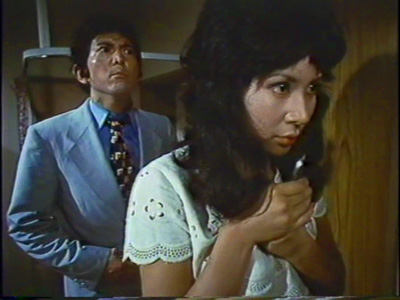 Meet Reiko (Noriko Kurosawa). She's young and sexy but a bit of a head case. Seems she can't hear music. Go ahead, put a radio up to her head -- she just can't hear it. Also, she can't experience sexual pleasure. Unless, of course, she's with a man who's impotent or on his death bed. Perhaps it all has something to do with being hot for her brother (whom she witnessed getting it on with their aunt)? She also has a scissor fixation. Hmm. And she dreams of a bull coming out of the sky with horns shaped like huge penises. Her psychiatrist is having a field day. But can he really get to the bottom of her problems?
Watching The Music (Ongaku, 1972), one of Yasuzo Masumura's better yet lesser-known flicks, made me realize how long it's been since I've seen an truly, wonderfully bizarre film. Masumura delivers the fucked-up, Freudian goods in this exploration of incest, necrophilia, rape, suicide, sexual dysfunction, and, of course, mental illness. Noriko Kurosawa is amazing, a one-woman encyclopedia of psychosexual neurosis, channeling a dozen conflicting impulses at once (in a near-perpetual state of undress). Quite frankly, she burns up the screen, making for far more compelling viewing than would have been the case with a less gifted and demonstrative actress.
However, the lovely Ms. Kurosawa (no relation) can't take all the credit for the murky, manipulative mind job that is The Music. The film is based on a novel by Yukio Mishima, himself a notable nut job (you'll recall he famously attempted to take over an army base in 1970 and, failing, subsequently committed a painfully protracted seppuku). Masumura directed Mishima in the not-great vanity picture Afraid to Die (1960); it wasn't Masumura's fault -- Mishima just wasn't much of an actor. The noted novelist was much better as a "human doll" in Kinji Fukasaku's Black Lizard (1968) and in the tiny role of a samurai who commits a spontaneous seppuku (!) in Hideo Gosha's Tenchu! (1969).
As for your being able to see The Music, well I won't lie to you, it ain't gonna be easy. It's not available commercially. I got a copy through back channels, so you're gonna have to know a collector to get a gander at this delightfully demented picture. But hey, things can change. Many's the time I've secured a hither-to hard-to-find film only to see it released commercially in the US a couple of years later. Who knows, maybe Fantoma will put it out? They've been doing great work carrying the Masumura torch, with half a dozen titles out to date. Perhaps we should all send them an email? If they get enough requests, they just might do it. That would be great, because this is a forgotten gem that really deserves to be seen.
Thursday, August 12, 2010
Nagisa Oshima Pt. 1
 Over the years, many a Japanese filmmaker has captured my attention, becoming the object of a protracted obsession: Akira Kurosawa, Masaki Kobayashi, Beat Takeshi, Kenji Misumi, Yasuzo Masumura, Kenji Mizoguchi, Hideo Gosha, Kazuo Ikehiro, and on and on. Nagisa Oshima, however, was never one of them. I don't know why, the guy just never got under my skin. I liked Cruel Story of Youth, Realm of Passion and Taboo. The Realm of the Senses was alright. Didn't care for Merry Christmas, Mr. Lawrence. Hated Violence at Noon. And yet, he is one of the Big Names, so in light of the recent Criterion box (Oshima's Outlaw Sixties), as well as a couple of suggestions from Peter Nellhaus, I decided to delve deeper into this filmmaker's oeuvre. Here's what I've come up with so far.
Pleasures of the Flesh (1965)
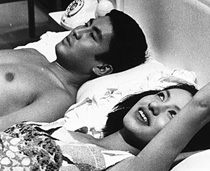 I really enjoyed this weird tale of a slightly insane young man who murders for love (unrequited), then is blackmailed into holding a small fortune for a crooked government official (just until the old guy gets out of prison). The young man, played compellingly by Katsuo (brother of Kinnosuke) Nakamura, decides fuck it, and uses the money to create a living fantasy of luxury and non-stop sex. Of course, this extended spree takes its toll, the man growing jaded and cruel. According to Audie Bock, the young man symbolizes Japan, newly rich and without a moral compass. (Oshima utilized symbolism quite a bit in his mid to late 60s films as we shall see.) I appreciated this careful-what-you-wish-for-you-might-get-it parable and found the plot and pace right on the money (not always a given with Oshima). So I give this one a thumbs up.
A Treatise on Japanese Bawdy Songs (1967)
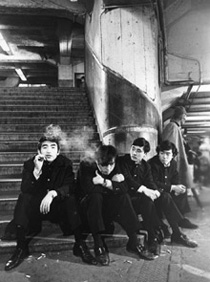 Criterion is using the alternative title Sing a Song of Sex, but that title is misleading. This isn't some light-hearted sex romp, but rather a somewhat dry tale of four male high school graduates and the perverse directions in which their misguided energies take them. Issues touched upon include rape fantasies (which may or may not come true), the death of a teacher (who may or may not have been murdered), peace rallies, an obsession with an older woman and, of course, singing. Lots of singing. If it isn't the incessant repetition of one particular Japanese bawdy song by the boys, it's folk songs, drinking songs, even a little Korean prostitute ditty evoking a motif common to several Oshima films of the period, that of Korean identity in post-war Japan. Also present is Oshima's singular flag imagery. This time out it's an alternative Japanese flag, with a black dot instead of a red one, symbolizing Oshima's regard for Japan as a dead nation (the black dot flag and Japan's treatment of Koreans is also featured prominently in Oshima's Death by Hanging). Too bad A Treatise on Japanese Bawdy Songs unravels so badly in the third act. Either Oshima lost interest, or he decided to drive us all crazy -- this also happens in films of this period (see Violence at Noon). Worth a look if you're interested in Japan of the late 60s, but I couldn't really recommend it otherwise.
Boy (1969)
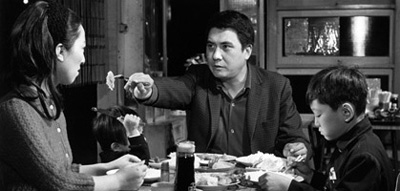
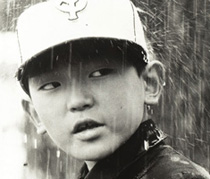 Based on real events, it's the story of an incredibly dysfunctional family of con artists who fake being hit by automobiles to extort money from the distraught drivers. Fumio Watanabe, one of Oshima's go-to actors, turns in another great performance as a truly despicable man, the father who forces his wife and young son to run out in traffic, risking their lives for payoffs so he can lounge around in hotels and eat. Oh, the eating. This guy is always eating. (Watanabe, in the photo up top, was a versatile actor with a bulbous nose, perhaps the Karl Malden of Japanese cinema? In the 70s he moved to Toei where he played heavies in such exploitation classics as Joy of Torture and Convent of the Sacred Beast.) Oshima's flag imagery is in full force here; this time, it's the standard Japanese flag, always in close proximity to the family, making me suspect it symbolizes some aspect of Japanese society with which the filmmaker has an issue (lassitude? Gluttony? Mistreatment of the young?). Bottom line: Awesome film, the best I've seen from Oshima and one that is rightly singled out as a classic. Young Tetsuo Abe, playing the eponymous 10-year-old, gives a devastating performance as the tough little guy who endures painful injuries, a life of uncertainty and all his father's cruelty and manipulation. This is the film Criterion should release.
Thursday, August 5, 2010
Shogun Assassin
 Back in 1980 a couple of guys decided to re-cut the second Lone Wolf and Cub film (Baby Cart at the River Styx), add a few scenes from the first film (Sword of Vengeance), change the storyline, replace the music and dub it in English. Now I'm a bit of a purist, me, and, to be blunt, I consider it a desecration. I said as much in my first book, Stray Dogs & Lone Wolves. Nevertheless, the folks at Animeigo sent me a copy anyway. In blu-ray no less. And to tell you the truth, I'm glad they did. Not that it's changed my opinion of the film itself, but the extras are quite nice and the transfer does look gorgeous. Just so long as I don't have to hear that insufferable "voice of Daigoro" narration and Sandra Bernhard voicing lady ninjas.
Fortunately, the disk contains not one but two commentary tracks. One features folks involved in the 1980 production. The other has "film scholar" Ric Meyers talking non-stop while another guy, martial artist Steve Watson, tries periodically to comment on what's happening onscreen. Meyers used to write a column for the now-defunct Asian Cult Cinema and, to his credit, is full to overflowing with background information.
There's also a great interview with Samuel L. Jackson. Turns out his interest in samurai film goes way beyond voicing the animated Afro Samurai series. He's got a huge Asian film collection and is more than happy to tell you all about it. Between Jackson and Meyers, it's a genuine Japanese film nerd out!
And of course there are the standard Animeigo reference materials that always enhance their releases, providing historical and cultural background and making outfits like Media Blasters look like the fly-by-night hacks they are.
So even though I wouldn't personally recommend Shogun Assassin, I realize it's as close as some folks are going to come to watching a samurai film, and I can respect that it was a doorway for people back in the 80s to discover the real thing. The TV mini-series Shogun had a similar impact. I guess whatever gets people looking to the East has its merits. I'll leave it at that.
Tuesday, August 3, 2010
They can't all be good Pt. 2
Bad choices. They're what holds us back in life. They impact our lives in adverse and unpredictable ways, wasting precious time and resources. I know because I've made some lately, in terms of my film viewing. So once again I must sully the pristine pages of my virtual salon with reviews of bad films. It's the only way to reclaim some vestige of value from an otherwise utterly unprofitable enterprise.
 I wasn't expecting much from Tokyo Gore School (2009); it was sent to me by one of my PR contacts, so I figured I owed them a look. I thought it would be yet another OTT gross-out like the similarly-named Tokyo Gore Police or, perhaps, Robogeisha. Turns out there's precious little gore involved, the story revolving instead around an internet-based fighting game where high school kids target one another for fun and cash prizes. So we spend 109 minutes watching kids alternately staring at their cell phones and running after one another. Yawn. Occasionally we get a bit of philosophical rumination re: Japan's school bullying problem, as well as some half-hearted attempts at parkour, but these elements can't save this vacuous life-drainer.
So I turned to a master filmmaker, Yasuzo Masumura, for solace. I'm a great fan of his work and have made an effort recently to obtain as many of his titles as possible (I have over a dozen including Kisses, Giants and Toys, Black Test Car, Manji, Red Angel, Yakuza Soldier, A Lustful Man, Blind Beast and The Razor 2: The Snare). Masumura is one of those go-to guys, always great. Or not. I discovered that Masumura, In common with most of his contemporaries, wasn't perfect (go figure), and on occasion could make a clunker.
 In this case, it's a film called Irezumi (which means tattoo) from 1966. It's a tale of a beautiful woman forced into tattooed sexual slavery. The sumptuous cinematography is provided by the great Kazuo Miyagawa, and the cast features Kei Sato and Masumura golden girl Ayako Wakao. The script, by Kaneto Shindo, has passages like this one, spoken by an evil tattoo artist: "The spider is moving. Painful, isn't it. The spider's embrace is strong. Look! Look in the mirror. On your back lives a golden orb-web spider. This joro spider will kill countless men and you will gorge on their corpses. In this creature I have infused the soul of my tattoo art. It's my whole life!" The problem with the film lies in the lack of development of the central character, Otsuya, the wronged woman with the big spider tattoo on her back. We never get a sense of who she really is -- it's as if Shindo and Masumura were captivated with the gothic trappings of the story and forgot to provide essential information that would have otherwise drawn us into the web they were spinning. Anyway, you check it out and see if you agree, but for me it was a dud.
 So I turned to another big name from the 60s, Nagisa Oshima. While not a great fan of Oshima (he's always seemed to trade more on controversy than talent in my opinion), I've enjoyed films like Cruel Story of Youth, In the Realm of Passion and Taboo. However he's just as likely to make a crap film like Merry Christmas Mr. Lawrence or Violence at Noon. The latter film, also from 1966, I saw the other day, still looking for a redeeming Japanese film experience. It started out promising, again with Kei Sato (this time as a rampaging serial killer). While the performances are great and there are some lovely, Nouvelle Vague-inspired jump cuts, the film dissolves halfway through into tedious, repetitive dialog that goes nowhere for what seems like hours. You're just waiting, hoping, praying for it to end. Really bad.
So there you have it, three more disappointments. I hate to sound like some old curmudgeon, but I have not choice. I write about film, it's what I do. So I think it best to report and keep on moving. Don't let my comments stop you from seeking out these films, though (with the exception of Tokyo Gore School). I could have my head up my ass (wouldn't be the first time). I look forward to your comments.
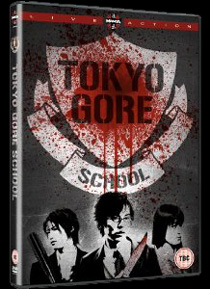 I wasn't expecting much from Tokyo Gore School (2009); it was sent to me by one of my PR contacts, so I figured I owed them a look. I thought it would be yet another OTT gross-out like the similarly-named Tokyo Gore Police or, perhaps, Robogeisha. Turns out there's precious little gore involved, the story revolving instead around an internet-based fighting game where high school kids target one another for fun and cash prizes. So we spend 109 minutes watching kids alternately staring at their cell phones and running after one another. Yawn. Occasionally we get a bit of philosophical rumination re: Japan's school bullying problem, as well as some half-hearted attempts at parkour, but these elements can't save this vacuous life-drainer.
So I turned to a master filmmaker, Yasuzo Masumura, for solace. I'm a great fan of his work and have made an effort recently to obtain as many of his titles as possible (I have over a dozen including Kisses, Giants and Toys, Black Test Car, Manji, Red Angel, Yakuza Soldier, A Lustful Man, Blind Beast and The Razor 2: The Snare). Masumura is one of those go-to guys, always great. Or not. I discovered that Masumura, In common with most of his contemporaries, wasn't perfect (go figure), and on occasion could make a clunker.
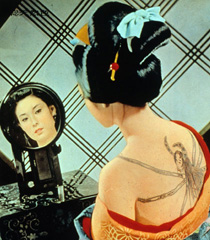 In this case, it's a film called Irezumi (which means tattoo) from 1966. It's a tale of a beautiful woman forced into tattooed sexual slavery. The sumptuous cinematography is provided by the great Kazuo Miyagawa, and the cast features Kei Sato and Masumura golden girl Ayako Wakao. The script, by Kaneto Shindo, has passages like this one, spoken by an evil tattoo artist: "The spider is moving. Painful, isn't it. The spider's embrace is strong. Look! Look in the mirror. On your back lives a golden orb-web spider. This joro spider will kill countless men and you will gorge on their corpses. In this creature I have infused the soul of my tattoo art. It's my whole life!" The problem with the film lies in the lack of development of the central character, Otsuya, the wronged woman with the big spider tattoo on her back. We never get a sense of who she really is -- it's as if Shindo and Masumura were captivated with the gothic trappings of the story and forgot to provide essential information that would have otherwise drawn us into the web they were spinning. Anyway, you check it out and see if you agree, but for me it was a dud.
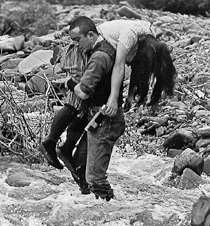 So I turned to another big name from the 60s, Nagisa Oshima. While not a great fan of Oshima (he's always seemed to trade more on controversy than talent in my opinion), I've enjoyed films like Cruel Story of Youth, In the Realm of Passion and Taboo. However he's just as likely to make a crap film like Merry Christmas Mr. Lawrence or Violence at Noon. The latter film, also from 1966, I saw the other day, still looking for a redeeming Japanese film experience. It started out promising, again with Kei Sato (this time as a rampaging serial killer). While the performances are great and there are some lovely, Nouvelle Vague-inspired jump cuts, the film dissolves halfway through into tedious, repetitive dialog that goes nowhere for what seems like hours. You're just waiting, hoping, praying for it to end. Really bad.
So there you have it, three more disappointments. I hate to sound like some old curmudgeon, but I have not choice. I write about film, it's what I do. So I think it best to report and keep on moving. Don't let my comments stop you from seeking out these films, though (with the exception of Tokyo Gore School). I could have my head up my ass (wouldn't be the first time). I look forward to your comments.
Tuesday, July 13, 2010
Triangle
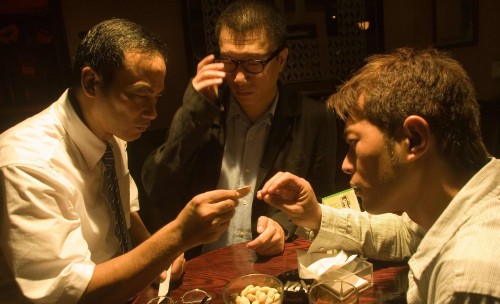 Triangle (2007) is an engaging caper flick concerning three Hong Kong losers. It's directed by three great Hong Kong filmmakers: Wong Kar Wai, Ringo Lam and Johnny To. Oh, and among other things, there's a love triangle. So you've got a triangle of triangles, as it were. And, just for good measure, there are some triad guys running around as well. Guess it's true what that redneck Schoolhouse Rock singer sang, "three is a magic number."
The three losers are: Lee Bo Sam (Simon Yam), a creepy businessman who may or may not have killed his first wife; Fai (Louis Koo), a flaky cabbie who's in hot water with some local gangsters; and Mok (Sun Hong Lei), a knowledgable yet taciturn antique dealer. They unearth a Tang dynasty coffin wherein they find the film's MacGuffin, a garment made of gold coins worth millions. Also chasing the treasure is a local cop (Lam Ka Tung) who's having it off with Lee's neurotic second wife Ling (Kelly LIn) -- they gum up the works considerably.
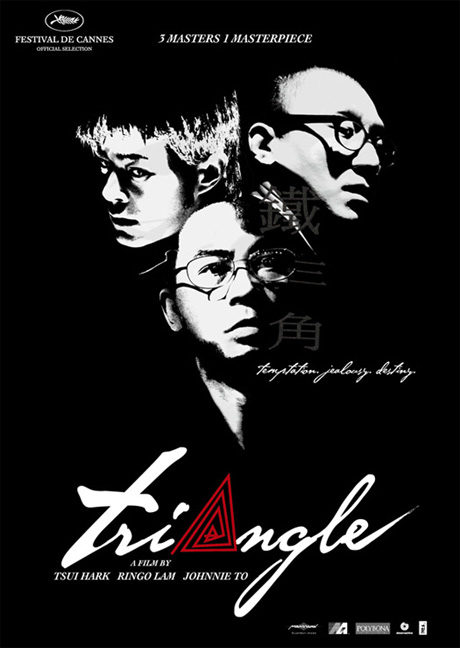 But the creaky plot isn't what's good about Triangle. It's really more of a character study, and a good lesson for any young filmmaker learning how to establish strong characterizations on the fly. Economical yet effective dialog plus top-notch acting puts us on intimate terms with the three principles almost from the get-go. Also fun, of course, is observing how the three directors handle their segments (Wong has the first third, Lam the second, and To the third). Wong's bit features a lot of daytime and exterior shots; Lam goes a bit darker and more emotional, turning the tables on the audience in regards to Lee Bo Sam, the most enigmatic character of the piece (played to perfect pitch by the great Simon Lam); by the time Johnny To gets the reins, it's all about darkness and night, with a grand finale in which the lights go out again and again …
I find pictures like Triangle, where the three directors share the same story, far more interesting than when each get their own vignette; things can go so far afield in the latter scenario, it often feels like three different short films. Here, the filmmakers are forced to work together while still imparting their own individual styles. (If you appreciate this as well, I suggest you check out the American indy horror flick The Signal.)
So there you go: Great directors, great cast, great fun.
Friday, July 9, 2010
Mystics in Bali
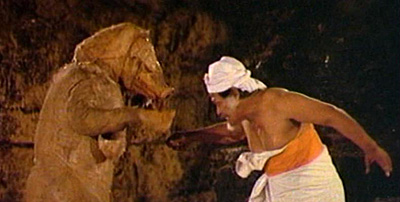 I wish I had seen the Indonesian horror classic Mystics in Bali (1981) when it came out. I was a teenager then and would have appreciated it more -- certainly wouldn't have noticed the cheesy special effects as much, and would have just reveled in the craziness. Coming to it late now, especially after reading about it in Pete Tombs' Mondo Macabro and elsewhere, and having imagined the big scene where the girl's head detaches from her body and flies around with vital organs in tow, well frankly it's a let-down. They achieved the effect in two ways: first, the separation itself, a very primitive optical printer job with the actress's real head, and then a prop head w/guts on a wire. The latter was by far the better effect; you couldn't see it very well and it zipped through the night air with a flair -- much like the real thing, one would imagine.
And make no mistake, out in the provinces, those villagers really do believe in that stuff. Some go so far as to place thorns around their windows so as to snag on the hanging entrails, should one of these floating monstrosities ever try to venture in. The most shocking scene in the film involves just such a home invasion, the head making a meal of a newborn baby as it's coming out! Of course we only get a mother's-eye view which, if you didn't know better, looks rather like a bit of disembodied head cunnilingus.
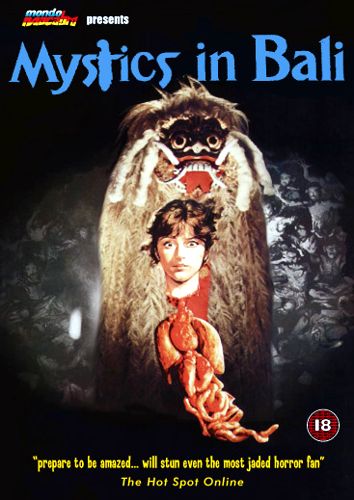 And whose head is this, anyway? It belongs to pretty Cathy Kean (Ilona Agathe Bastian), a writer from the US who's in Bali doing research on the practice of leak (pronounced LEE-AK), supposedly the world's most powerful form of black magic. With the help of the suave Mahendra (Yos Santo), she meets the leak queen and gets more schooling than she bargained for. And, of course, she becomes the evil queen's slave.
I realize it's ridiculous to complain about the special effects (as well as the crap acting and general cheapness of the production). I'm sure, considering the state of Indonesian cinema at the time, Mystics in Bali was probably considered fairly cutting-edge. I'm obviously reacting out of self-hype, that process where you build something up in your head to the point where nothing can come close to it. In fact, the film has a funky charm and I'd recommend it to anyone who wants to venture beyond the realm of good taste and proper production values and get down and dirty with some jungle sorcery. Certainly the scenes where women transform into snakes and pigs are a scream -- at one point the leak queen gets stuck halfway, jumping around and fighting as a pig-woman with pendulous pig tits! Yes, it's a unique film experience, there's no denying it -- just make sure to keep you expectations set on "low."